Facebook
 X
X
 Pinterest
 Copy Link
The Psychology of Homebuying: How Buyer Perception Shapes Every Showing

There’s a word I often use with clients: perception.
Not because buyers are irrational. Not because homes need to be perfect. But because homebuying is deeply emotional — and perception often shapes reality long before logic ever gets involved.
A buyer can walk into two homes with nearly identical layouts, square footage, and pricing… and leave feeling completely different about each one. One “feels right.” The other doesn’t. One feels cared for. The other feels overwhelming. One creates confidence. The other creates hesitation.
That’s the psychology of homebuying.
And understanding it matters whether you’re buying, selling, staging, pricing, or simply preparing your home for the market.
Buyers Start Forming Opinions Immediately
Most buyers begin making emotional judgments within seconds of entering a home. Often before they’ve even reached the kitchen.
The smell when they walk in.
The lighting.
The temperature.
The sound level.
The clutter.
The condition of small details.
Even the energy of the space itself.
These first impressions quietly shape how buyers interpret everything else they see afterward.
A small bedroom in a bright, clean, thoughtfully presented home may feel “cozy.”
That same bedroom in a dark, cluttered, or poorly maintained space may suddenly feel “tiny.”
The room didn’t change.
The perception did.
This ties directly into another conversation we’ve had in previous blogs — particularly in:
- “What Buyers Notice Immediately When Walking Into Your Home”
- “Why Some Homes Sit While Others Sell Fast (Even in the Same Neighborhood)”
- “Using a Proactive Listing Agent Versus a Reactive One”
Because buyers rarely evaluate a home in isolated pieces. They evaluate how the home makes them feel as a whole.
Buyer Psychology Is About Risk Assessment
One of the biggest misconceptions sellers have is believing buyers only focus on major defects.
In reality, buyers are constantly asking themselves a silent question:
“What else is wrong here?”
A dripping faucet may not matter financially.
But psychologically? It can create doubt.
Peeling paint.
Burned-out light bulbs.
Dirty vents.
An overloaded closet.
A scuffed-up front door.
Individually, these things may seem small.
Collectively, they can create a perception that the home hasn’t been cared for — which often causes buyers to emotionally inflate the importance of bigger concerns.
This is one reason I talk so much about being proactive instead of reactive.
By the time showing feedback starts rolling in, buyers have already formed their emotional opinions. Sometimes the issue isn’t the house itself. It’s the perception created before buyers ever had a chance to fully connect with it.
The “Rainbows and Unicorns” Conversation
One of the analogies I often use with clients is what I jokingly call the “rainbows and unicorns” spectrum.
At one end?
The absolute dream scenario:
Multiple offers.
Perfect terms.
Immediate emotional connection.
At the other?
The tougher conversations:
Longer days on market.
Price reductions.
Buyer hesitation.
Inspection negotiations.
Most transactions land somewhere in the middle.
The goal isn’t perfection.
The goal is understanding how buyers think so we can strategically position the home for the strongest possible response.
That means acknowledging reality early instead of waiting for buyers to point it out later.
Perception Affects Value, Too
This is something I touched on in:
- “Why ‘Zestimate’ Isn’t the Full Story (And What Actually Determines Value)”
- “Pricing Your Home Right: Strategy Over Guesswork”
Two homes can technically support similar value ranges on paper — but buyer perception can dramatically affect how aggressively buyers pursue one over the other.
Homes that feel move-in ready often create stronger emotional urgency.
Homes that feel overwhelming create caution.
And cautious buyers negotiate differently.
Sometimes sellers focus heavily on what they’ve invested into the home emotionally or financially. But buyers respond to what they experience in real time during the showing itself.
That’s why strategy matters so much.
Buyers Aren’t Just Buying a House
They’re buying:
- Relief
- Comfort
- Identity
- Lifestyle
- Stability
- Possibility
They’re imagining holidays.
Morning coffee routines.
Where furniture will go.
Whether the kids will like the backyard.
How stressful the commute feels.
Whether the house feels peaceful after a long day.
That emotional layering starts almost instantly.
Which is why things like lighting, cleanliness, furniture placement, curb appeal, and overall presentation matter far more than many sellers initially realize.
This also ties closely into our previous blog:
“The Truth About “Dream Homes”: Expectations vs. Reality (and How to Navigate It)”
Because buyers are constantly balancing logic with emotion — and emotion almost always enters the room first.
The Goal Isn’t “Perfect.” It’s Connection.
One of the biggest mistakes sellers make is assuming they need perfection to attract buyers.
You don’t.
Buyers understand homes are lived in.
They expect normal wear.
They know no property is flawless.
But buyers do want to feel confidence.
They want to feel:
- The home has been cared for
- The pricing makes sense
- The presentation feels intentional
- The space feels welcoming
- Potential concerns have been thoughtfully addressed
In many ways, selling a home successfully is less about creating perfection and more about removing distractions that prevent emotional connection.
This Is Why Strategy Matters
A good listing strategy isn’t just about putting a home online and waiting for feedback.
It’s understanding:
- How buyers think
- How buyers emotionally react
- How perception impacts negotiations
- How first impressions shape value
- How presentation influences urgency
That’s also why I often challenge clients gently instead of simply agreeing with everything they say.
Not to be difficult.
Not to criticize their home.
But because protecting their outcome sometimes means helping them see the property through a buyer’s eyes before the market does.
And honestly? That perspective often makes all the difference.
FAQs
Do buyers really make decisions that quickly?
Yes — emotionally, many buyers form strong first impressions within moments of entering a home. That initial emotional reaction often influences how they interpret everything else they see afterward.
Does staging actually matter?
Absolutely. Staging helps buyers emotionally connect to a space and better understand layout, scale, and functionality. Even light staging or decluttering can significantly improve buyer perception.
What if my home isn’t fully updated?
That’s okay. Buyers don’t necessarily expect perfection or luxury finishes. Cleanliness, maintenance, lighting, and presentation often matter more than having the newest everything.
Can small cosmetic issues really impact offers?
Yes. Minor issues can create larger psychological concerns for buyers because they start wondering what else may have been neglected.
How do I know what buyers may perceive negatively?
This is where having a proactive, honest agent matters. A strong listing strategy includes evaluating the home from a buyer’s perspective before it hits the market.
Closing Thoughts
Real estate is never just numbers and square footage. It’s psychology, emotion, perception, and human behavior layered into one of the biggest financial decisions people will ever make.
And the homes that connect best with buyers are usually the ones that understand that from the very beginning.
The Art of Negotiation: What Really Happens Behind the Scenes

When people think about buying or selling a home, they often picture the obvious milestones: touring homes, putting up a sign in the yard, attending inspections, or celebrating at the closing table.
What many don’t see is the amount of negotiation happening quietly behind the scenes long before the keys exchange hands.
And contrary to popular belief, negotiation in real estate is rarely about “winning.” The best negotiations are about strategy, communication, timing, risk management, and understanding human behavior. It’s about helping clients make smart decisions while protecting both their financial and emotional investment.
Because the reality is this:
A great negotiator doesn’t just react to offers. They anticipate problems before they happen.
That proactive mindset is something I’ve talked about before in blogs like “Proactive vs. Reactive Listing Agents: Why the Difference Matters More Than Sellers Realize” and “Pricing Your Home Right: Strategy Over Guesswork.” Both directly tie into negotiation because pricing, preparation, positioning, and expectations all influence leverage before negotiations even begin.
Negotiation Starts Before the Home Ever Hits the Market
One of the biggest misconceptions in real estate is that negotiation starts when an offer arrives.
It doesn’t.
Negotiation often begins during:
- Pricing discussions
- Home preparation conversations
- Repair recommendations
- Marketing strategy
- Offer timing
- Showing schedules
- Disclosure planning
- Photography and presentation decisions
Every decision made upfront either strengthens or weakens negotiating power later.
For example, overpricing a home may seem harmless initially, but it can create a ripple effect:
- Longer days on market
- Reduced buyer urgency
- Increased price reduction pressure
- More aggressive buyer negotiations
- Lower perceived value
That’s why strategic pricing matters so much. It’s not about guessing high and hoping someone bites. It’s about creating positioning that encourages strong buyer interest and leverage.
This ties directly into my previous blog:
- “Why Some Homes Sit While Others Sell Fast (Even in the Same Neighborhood)”
- “Pricing Your Home Right: Strategy Over Guesswork”
Both play a major role in how negotiations unfold later.
Buyers and Sellers Are Negotiating Different Things
Another behind-the-scenes reality? Buyers and sellers are often negotiating completely different priorities.
A seller may care most about:
- Net profit
- Timeline
- Convenience
- Certainty
- Limited repairs
- Rent-back flexibility
Meanwhile, a buyer may prioritize:
- Monthly payment
- Closing cost assistance
- Inspection concerns
- Appraisal protection
- Competitive positioning
- Emotional comfort with the purchase
A strong negotiator understands what actually matters most to each side.
Sometimes the “highest offer” isn’t the strongest offer.
Sometimes a slightly lower offer with cleaner terms creates a better overall outcome.
This is especially important in today’s market where financing, insurance costs, interest rates, inspections, and appraisals can all shift the dynamics quickly.
The Psychology Behind Negotiation
Real estate is deeply emotional.
People aren’t just negotiating numbers. They’re negotiating:
- Stress
- Fear
- Timing
- Expectations
- Pride
- Uncertainty
- Future plans
This is one reason I spend so much time educating clients throughout the process. People make better decisions when they understand what’s happening and why.
Negotiation is also where experience and communication style matter tremendously.
A good negotiator knows:
- When to push
- When to pause
- When to stay quiet
- When to present data
- When to soften language
- When to protect the relationship between parties
- When a deal is becoming emotionally reactive instead of strategic
This is also why I often say I’m not a “yes man” agent. My role is not simply agreeing with everything a client wants to hear. It’s helping clients understand likely outcomes, possible risks, and realistic strategies so they can make empowered decisions.
Sometimes the best negotiation move is advocating strongly.
Sometimes it’s advising patience.
Sometimes it’s recognizing when walking away is actually the strongest position.
Negotiation Doesn’t End After the Offer Is Accepted
Many people assume negotiations stop once a contract is signed.
In reality, some of the most important negotiations happen afterward.
This can include:
- Inspection negotiations
- Repair requests
- Appraisal challenges
- Financing hurdles
- Title concerns
- Timeline adjustments
- Occupancy agreements
- Home sale contingencies
- Closing cost discussions
This is where preparation and proactive communication become critical.
A proactive agent is constantly watching for:
- Red flags
- Deal fatigue
- Communication breakdowns
- Emotional escalation
- Potential financing delays
- Appraisal concerns
- Inspection issues that may become larger problems later
This connects heavily to previous blogs we’ve discussed, including:
- “Step-by-Step: What Happens After You Go Under Contract”
- “The Hidden Costs of Buying a Home (That No One Talks About Enough)”
- “Pre-Approval vs. Prequalification: Why It Matters More Than You Think”
All of these topics directly influence negotiation leverage and deal stability.
The Best Negotiations Often Feel Calm
One of the biggest misconceptions fueled by television and social media is that strong negotiation always looks aggressive.
In reality, the strongest negotiations are often calm, strategic, professional, and solution-focused.
The goal is rarely to “beat” the other side.
The goal is getting clients to the best possible outcome while minimizing unnecessary risk and stress.
That may mean:
- Structuring cleaner terms
- Solving problems creatively
- Preventing emotional escalation
- Keeping communication productive
- Maintaining leverage without creating hostility
Because once negotiations become personal, deals often become harder—not stronger.
Why Experience Matters in Negotiation
Every transaction is different.
Different personalities, loan types, timelines, market conditions, inspection findings, and financing structures all change how negotiations should be approached.
That’s why experience matters beyond simply filling out paperwork.
It’s about:
- Reading situations early
- Anticipating challenges
- Understanding buyer and seller psychology
- Recognizing leverage points
- Protecting clients from preventable mistakes
- Knowing when a deal is solid—and when it may be unstable
It’s also why education-focused representation matters so much to me. Clients should understand the “why” behind recommendations, not just be told what to do.
The more informed clients are, the more confident and empowered they become during negotiations.
Closing Thoughts
The art of negotiation in real estate is rarely loud or dramatic. Most of the real work happens quietly behind the scenes through preparation, communication, strategy, timing, and problem-solving.
A strong negotiator isn’t simply someone who argues harder. It’s someone who understands how to position clients well from the very beginning, anticipate challenges before they become problems, and guide decisions with both strategy and perspective.
Because the best negotiations aren’t about pressure.
They’re about protection, preparation, and helping clients move forward confidently.
FAQs
Is negotiation only about the sale price?
Not at all. Negotiations can involve repairs, timelines, contingencies, closing costs, occupancy agreements, appraisal gaps, appliances, and many other terms that impact the overall deal.
Can buyers negotiate in a competitive market?
Yes. Even in competitive markets, strategy matters. Strong terms, flexibility, preparation, and financing structure can all improve negotiating power.
Why do some deals fall apart after inspections?
Inspections can uncover unexpected issues that change buyer comfort levels or financial expectations. This is where proactive preparation and realistic expectations become extremely important.
Does overpricing a home hurt negotiations?
Often, yes. Overpricing can reduce buyer interest, increase days on market, and weaken negotiating leverage later.
What makes a strong offer besides price?
Strong financing, fewer contingencies, flexible timelines, appraisal protections, larger deposits, and overall deal stability can all make an offer more attractive.
Why a “Zestimate” Isn’t the Full Story (And What Actually Determines Value)

The Internet Made Home Values Easier to Access… But Not Always Easier to Understand
One of the first things many homeowners do when they think about selling is check their home’s online estimate. Whether it’s a Zestimate, automated value tool, or instant online valuation, it can feel like a quick answer to a very important question:
“What is my home worth?”
The problem?
That number is rarely the full story.
Automated valuation models (AVMs) can be helpful as a starting point, but they often miss the real-world details that actually influence what buyers are willing to pay in today’s market. Sometimes they overestimate. Sometimes they underestimate. And sometimes they create expectations that simply don’t align with what buyers, appraisers, or the market are currently doing.
This is one of the biggest reasons pricing strategy matters so much — and why real estate valuation is part data, part market knowledge, and part buyer psychology.
As a Pricing Strategy Advisor (PSA) certified through the National Association of Realtors, one of the things I focus heavily on is helping clients understand the difference between an online estimate and a truly strategic market evaluation.
What a Zestimate Actually Is
A Zestimate is an automated estimate created by algorithms using public data and nearby comparable sales. It looks at things like:
- Square footage
- Bedroom and bathroom count
- Tax records
- Nearby sales
- General market trends
And while that sounds impressive, the reality is that these systems cannot fully understand your actual home experience.
Algorithms cannot walk through your property.
They cannot smell pet odors.
They cannot feel how dark a room is.
They cannot recognize poor layout flow, deferred maintenance, or the fact that your kitchen renovation was done beautifully versus cheaply.
On the flip side, they also may not recognize premium upgrades, exceptional maintenance, landscaping quality, mountain views, privacy, lot usability, or the emotional appeal buyers feel when they walk into a home that simply “feels right.”
That’s where human analysis still matters.
What Actually Determines Home Value?
1. Condition Matters More Than Owners Often Realize
Two homes with identical square footage in the same neighborhood can sell for dramatically different prices depending on condition.
Buyers notice things immediately:
- Paint condition
- Flooring wear
- Smells
- Lighting
- Cleanliness
- Deferred maintenance
- Updating level
- Overall care
In fact, this directly connects to another recent blog I wrote about first impressions and buyer psychology:
“What Buyers Notice Immediately When Walking Into Your Home.”
When buyers emotionally disconnect early, value perception drops quickly.
2. Buyer Psychology Plays a Huge Role
Value is not determined only by math.
It is also determined by emotional response.
A home that feels:
- Bright
- Clean
- Well maintained
- Move-in ready
- Spacious
- Peaceful
- Updated
…will usually outperform a similar home that technically checks the same boxes on paper.
This is one reason I spend so much time helping sellers proactively prepare their homes before listing, rather than waiting for negative feedback after the home hits the market.
If you read my recent blog on proactive versus reactive listing strategies, this ties directly into that conversation. Preparing ahead of time can significantly impact perceived value and buyer response.
3. The Market Changes Faster Than Algorithms
Online estimates are often reacting to past data.
But active buyers are responding to:
- Current inventory levels
- Interest rates
- Seasonal demand
- Competition
- Economic shifts
- Buyer fatigue
- Local trends
A valuation tool may not fully understand that:
- Your neighborhood suddenly became highly desirable
- Buyers are avoiding homes needing work
- Updated homes are commanding premiums
- Certain layouts are becoming less popular
- Inventory shortages are changing buyer behavior
Markets move emotionally and locally — not just statistically.
4. Pricing Strategy Impacts Final Value
One of the biggest misconceptions in real estate is that pricing higher automatically creates a higher sale.
In reality, overpricing often causes:
- Reduced showing activity
- Longer days on market
- Buyer skepticism
- Stale listing perception
- Price reductions
- Lower final sale prices
Strategic pricing is about positioning the home correctly from the beginning to maximize buyer interest and competition.
That’s why pricing is not just about “what you want to get.”
It’s about:
- Market positioning
- Buyer behavior
- Competition analysis
- Timing
- Presentation
- Negotiation leverage
This ties closely into another related blog:
“Pricing Your Home Right: Strategy Over Guesswork.”
All of these topics work together because home value is never just one number on a website.
5. Appraisals and Market Value Are Not Always the Same Thing
Another important distinction:
- Market value = what buyers are willing to pay
- Appraised value = what a lender believes supports the loan
Sometimes these align perfectly.
Sometimes they do not.
This is especially important in competitive markets where buyers may emotionally stretch beyond what comparable sales fully support.
A strong agent helps clients navigate both the emotional and financial sides of value.
Why Professional Pricing Analysis Still Matters
A professional market analysis looks deeper than algorithms can.
It considers:
- Property condition
- Upgrades
- Layout functionality
- Lot quality
- Buyer demand
- Neighborhood trends
- Competing inventory
- Showing activity
- Local market behavior
- Strategic positioning
It also includes real-world experience from actively watching what buyers respond to — and what they avoid.
That combination matters.
Because while online estimates can provide a starting point, they should never be mistaken for a complete pricing strategy.
Closing Thoughts
Online estimates can be useful tools, but they are exactly that — tools. Not final answers.
Your home’s value is shaped by far more than an algorithm can fully measure. Presentation, preparation, buyer psychology, local market conditions, and strategic pricing all play major roles in determining what happens once your home hits the market.
The goal is not simply to chase a number online.
The goal is to position your home in a way that creates the strongest possible response from real buyers in the current market.
And that takes more than an automated estimate.
FAQs
Are Zestimates accurate?
They can sometimes be reasonably close, but accuracy varies greatly depending on the area, available data, and property type. They should be viewed as a starting point, not a definitive valuation.
Why is my Zestimate different from what an agent says?
An agent evaluates factors algorithms often miss, including condition, upgrades, layout, buyer demand, market behavior, and competition.
Can my Zestimate affect my appraisal?
Not directly. Appraisers use comparable sales and lender guidelines, not Zillow estimates.
Should I price my home based on Zillow?
No. Pricing should be based on a full market analysis and strategic positioning within the current market conditions.
Why do some homes sell above Zestimate?
Buyer competition, emotional appeal, upgrades, location desirability, staging, and limited inventory can all push prices above automated estimates.
What Buyers Notice Immediately When Walking Into Your Home (And Why First Impressions Matter More Than Sellers Realize)

If Tuesday’s blog about proactive vs. reactive listing strategies made one thing clear, it’s this: the best results usually come from addressing concerns before buyers point them out. Today’s blog builds directly on that conversation by focusing on something many sellers underestimate — what buyers notice immediately when they walk through the front door.
Because the truth is, buyers are making emotional and practical decisions within seconds of entering a home. And while they may not consciously say every thought out loud, those first impressions absolutely shape how they feel about the property, what flaws they overlook (or don’t), and ultimately what they’re willing to offer.
In my recent blog, “Proactive vs. Reactive Listing Agents: Why the Difference Matters More Than Sellers Realize”, we talked about the difference between waiting for feedback versus anticipating it ahead of time. This is exactly where that strategy matters most.
A buyer’s first impression is not just about cleanliness. It’s about how the home feels the moment they enter.
Buyers Notice the Smell Before Almost Anything Else
This may not be glamorous, but it’s true.
If a home smells heavily of pets, smoke, mildew, strong cooking odors, overpowering candles, or even “too much air freshener,” buyers notice immediately. Sometimes they notice it before they even fully step inside.
And here’s the important part: buyers often emotionally connect smells to maintenance. Even if the issue is minor, a lingering odor can quietly trigger concerns about how well the home has been cared for overall.
This is why proactive preparation matters. Sometimes the fix is simple:
- Deep cleaning carpets
- Washing walls and fabrics
- Improving ventilation
- Addressing moisture issues
- Removing odor sources rather than masking them
A reactive approach waits for showing feedback to mention it. A proactive approach addresses it before the first buyer ever walks through the door.
Lighting Changes Everything
Dark homes tend to feel smaller, heavier, and less inviting — even when the square footage is great.
Buyers immediately notice:
- Burnt out light bulbs
- Dim rooms
- Heavy curtains blocking natural light
- Harsh lighting tones
- Shadowy corners
One of the easiest ways to improve a showing experience is simply maximizing brightness and warmth. Open blinds. Turn on lights. Use consistent bulb temperatures throughout the home. Let buyers actually see the space.
Natural light is emotional. Buyers respond to it instinctively.
Clutter Makes Rooms Feel Smaller
Even beautifully maintained homes can feel overwhelming if there is too much visual noise.
Buyers notice:
- Overpacked countertops
- Excess furniture
- Overflowing closets
- Crowded shelves
- Too many personal items
The goal is not to erase personality or make a home feel sterile. The goal is to create enough breathing room for buyers to mentally place themselves in the home.
This is especially important because buyers are not just viewing the house — they are subconsciously imagining their future life there.
Deferred Maintenance Stands Out Fast
That dripping faucet you stopped noticing years ago?
Buyers notice it.
The chipped paint?
Loose doorknob?
Scuffed trim?
Dirty HVAC vent?
Worn caulking around the tub?
Buyers may not mention every single thing directly, but collectively, these details create a story in their mind about how the home has been maintained.
And once buyers start mentally tallying “projects,” they often become more cautious emotionally and financially.
This is why proactive listing preparation matters so much. Many small issues are inexpensive to address before listing but can feel much larger to buyers during showings.
The Entryway Sets the Tone
The first few steps into a home matter enormously.
Buyers notice:
- The condition of the front door
- Flooring immediately inside
- Temperature and airflow
- Lighting
- Ceiling height
- Smells
- Overall feeling
If the entrance feels cramped, dark, cluttered, or neglected, buyers carry that feeling into the rest of the showing.
But when the entry feels open, clean, bright, and welcoming, buyers tend to view the rest of the home more positively too.
First impressions create momentum.
Buyers Are Looking for Emotional Comfort
This is one of the biggest misconceptions in real estate: buyers are not only evaluating facts and features.
They are evaluating how the home makes them feel.
A perfectly acceptable home can lose momentum if buyers feel uneasy, overwhelmed, distracted, or uncertain walking through it.
Meanwhile, homes that feel warm, clean, calm, bright, and cared for often create stronger emotional attachment — even when they are not technically “perfect.”
That emotional connection matters tremendously when offers are written.
What This Means for Sellers
One of the most valuable things a listing agent can do is help sellers see the home through a buyer’s eyes before the home hits the market.
Not to criticize.
Not to nitpick.
Not to create unnecessary expense.
But to proactively identify the small details buyers are most likely to notice immediately — and help sellers decide what improvements will have the biggest impact.
Because the goal is not perfection.
The goal is creating the strongest possible first impression from the very beginning instead of waiting for negative feedback after opportunities are already lost.
FAQs
Do buyers really decide that quickly?
Often, yes. While buyers may continue evaluating the home throughout the showing, their first emotional impression usually happens within the first few moments.
Should sellers fix everything before listing?
Not necessarily. Some updates provide much stronger return on investment than others. Strategic preparation matters more than chasing perfection.
What if my home is older?
Older homes can absolutely show beautifully. Buyers are usually more concerned about cleanliness, maintenance, functionality, and overall care than simply age.
Is staging always necessary?
Not always professionally, but thoughtful presentation almost always helps. Sometimes simple decluttering, furniture adjustments, and lighting improvements make a huge difference.
How do I know what buyers will notice in my specific home?
This is where a proactive walkthrough and honest preparation strategy can be incredibly valuable before listing.
Closing Thoughts
The homes that make the strongest impression are rarely the “perfect” homes. They are the homes that feel intentional, cared for, welcoming, and thoughtfully prepared before buyers ever walk through the door.
And that’s exactly why proactive strategy matters so much in real estate.
Proactive vs. Reactive Listing Agents: Why the Difference Matters More Than Sellers Realize

When most sellers think about hiring a real estate agent, they focus on marketing, pricing, or commission. Those things absolutely matter — but one of the biggest differences between agents often shows up before the home even hits the market.
Some agents are reactive.
Others are proactive.
That difference can directly impact your first impressions, buyer interest, showing feedback, days on market, negotiating power, and ultimately your bottom line.
A proactive listing agent is not there to “yes” you through the process. They’re there to help you see the home through a buyer’s eyes before buyers ever walk through the door.
And that matters more than most people realize.
What Is a Reactive Listing Agent?
A reactive agent often waits for the market to tell the seller what is wrong.
The process usually looks something like this:
- The home goes live
- Showings begin
- Buyers provide feedback
- Problems start appearing repeatedly
- Price reductions or repairs happen later
On the surface, this may sound normal. After all, feedback can be helpful.
But the challenge is this:
The first buyers through your home are often some of the most motivated buyers you’ll see.
If those buyers walk away because of issues that could have been anticipated and addressed ahead of time, you may never get a second chance at that “fresh listing” momentum.
What Does a Proactive Listing Agent Do Differently?
A proactive listing agent works to identify concerns before the home hits the market whenever possible.
That doesn’t mean demanding perfection or asking sellers to spend unnecessary money.
It means helping sellers strategically prepare for buyer psychology and market expectations.
Sometimes that includes conversations about:
- Deferred maintenance
- Paint colors
- Odors or pet concerns
- Lighting
- Furniture placement
- Clutter or overpersonalization
- Landscaping and curb appeal
- Flooring condition
- Minor repairs
- Pricing expectations
- Professional photography readiness
A proactive agent understands that buyers are emotionally reacting to a home long before they logically justify their decisions.
The goal is not criticism. The goal is positioning.
Buyers Notice More Than Sellers Realize
One of the hardest parts of selling a home is that sellers naturally stop seeing certain things over time.
That’s completely normal.
You live in a home differently than buyers experience it during a 15-minute showing.
Buyers are evaluating:
- Smells
- Lighting
- Flow
- Maintenance concerns
- Noise
- Storage
- Cleanliness
- Overall emotional feel
Sometimes sellers are surprised when feedback starts rolling in because no one warned them beforehand.
That’s where proactive guidance matters.
A strong listing agent should be willing to respectfully say:
“Buyers may notice this.”
“This could become repeated feedback.”
“Here’s what I would recommend addressing before launch.”
That is not negativity.
That is strategy.
The Proactive Agent Difference
One of the most valuable things a listing agent can do is provide honest guidance with professionalism and care.
It can feel easier for an agent to simply agree with everything a seller wants:
- Overpricing the home
- Skipping preparation
- Ignoring obvious buyer objections
- Listing quickly without strategy
But avoiding hard conversations upfront can create harder outcomes later.
A proactive agent understands that protecting a seller sometimes means having respectful, honest conversations before the market does it for them.
Because once buyers start giving repeated feedback:
- The listing may lose momentum
- Price reductions may become necessary
- Buyers may assume something is “wrong”
- Negotiating power can weaken
Often, small proactive adjustments upfront can prevent larger reactive changes later.
First Impressions Matter More Than Ever
Today’s buyers are highly informed and highly visual.
Most buyers see your home online before they ever step inside.
That means:
- Photos matter
- Condition matters
- Presentation matters
- Pricing strategy matters
- Emotional impact matters
In many cases, buyers decide how excited they are about a property before they even schedule the showing.
A proactive listing strategy helps maximize those critical first impressions.
Proactive Doesn’t Mean Perfect
This is important:
A proactive agent is not trying to turn every home into a luxury magazine spread.
Every property has strengths and weaknesses.
The goal is not perfection.
The goal is preparation.
Sometimes the recommendation is:
- Fix it
- Improve it
- Adjust expectations around it
- Price strategically around it
- Or simply prepare sellers for likely buyer reactions
Transparency and preparation help sellers make informed decisions instead of emotionally reacting later when feedback arrives.
The Best Listing Relationships Are Collaborative
The strongest seller-agent relationships are built on trust, honesty, and strategy.
A good listing agent should:
- Advocate for you
- Educate you
- Prepare you
- Market effectively
- Communicate clearly
- Help you anticipate buyer concerns before they become obstacles
Selling a home is not just about putting a sign in the yard and waiting.
It is about positioning your home to create the strongest possible first impression from day one.
FAQs
Is buyer feedback still important if an agent is proactive?
Absolutely. Buyer feedback is always valuable. The difference is that proactive agents try to reduce predictable negative feedback before launch whenever possible.
Does a proactive agent always recommend spending money before listing?
No. A proactive approach is about strategy, not automatically spending money. Sometimes small adjustments make a major difference, and sometimes pricing strategy compensates for condition.
Can overpricing make buyer feedback worse?
Yes. Buyers tend to judge homes more critically when they feel pricing does not align with condition, updates, or competition.
Why do first days on market matter so much?
New listings typically receive the highest attention and excitement when they first hit the market. Losing momentum early can impact showing activity and negotiating strength later.
What if I disagree with my agent’s recommendations?
That’s okay. A strong agent should provide guidance and education, not pressure. The goal is collaborative decision-making with clear expectations.
Closing Thoughts
The best listing agents are not the ones who simply tell sellers what they want to hear.
They are the ones willing to thoughtfully prepare sellers for how buyers will experience the home — before the market starts delivering those messages through lost interest, repeated feedback, or price reductions.
Proactive strategy is not about criticism.
It is about creating opportunity.
And sometimes, the small conversations that happen before a listing goes live are the very things that help a seller achieve stronger results once it does.
Pricing Your Home Right: Strategy Over Guesswork

When it comes to selling a home, pricing is not a guessing game, a Zillow dart throw, or a “let’s try high and see what happens” situation. Pricing is strategy. And in today’s market, strategic pricing matters more than ever.
One of the biggest misconceptions sellers have is that pricing high “leaves room to negotiate.” In reality, overpricing often does the exact opposite: it limits buyer interest, increases time on market, weakens negotiating power, and can ultimately lead to price reductions that make buyers wonder what’s wrong with the home.
The truth? The right price doesn’t leave money on the table — it positions your home to attract the strongest possible interest from the beginning.
The First Days Matter Most
When a home first hits the market, it gets the most attention it will likely ever receive.
New listings generate excitement. Buyers who have been waiting for the right home suddenly jump in. Agents send listings to clients. Search alerts go out instantly. Showings are strongest early on.
That initial window is incredibly valuable.
If the home is priced appropriately, it creates momentum:
- More showings
- More online saves and shares
- Greater perceived demand
- Potential for stronger offers
- Better negotiating leverage
If the home is overpriced, buyers often pause before ever walking through the door.
Today’s buyers are educated. They are watching the market constantly. They compare homes quickly and can spot pricing inconsistencies faster than many sellers realize.
A home that feels overpriced online often never even gets the showing.
The Market Decides Value — Not Emotion
This is one of the hardest parts of selling a home emotionally.
Sellers remember:
- The upgrades they invested in
- The memories made there
- The effort spent maintaining the property
- The attachment to the space
Those things absolutely matter emotionally — but buyers evaluate differently.
Buyers compare:
- Square footage
- Condition
- Location
- Layout
- Competition
- Updates
- Overall value compared to other available homes
The market ultimately determines what buyers are willing to pay at a given time.
That’s why pricing strategy has to be rooted in data, positioning, timing, and buyer psychology — not just hope or emotional attachment.
Why “Testing the Market” Can Backfire
Many sellers ask:
“What’s the harm in trying high first?”
The challenge is that homes can become “stale” surprisingly quickly.
When buyers repeatedly see price reductions, days on market climbing, or a home sitting without activity, they often begin assuming:
- The seller is unrealistic
- Something may be wrong with the property
- Better opportunities may exist elsewhere
- They have negotiating leverage
Ironically, homes that start too high often sell for less than homes that were strategically priced correctly from the start.
Strong pricing strategy creates urgency.
Poor pricing strategy creates hesitation.
Pricing Is More Than Pulling Comparable Sales
A proper pricing strategy is far more nuanced than simply grabbing a few nearby sales and averaging numbers together.
A strategic pricing analysis considers:
- Current active competition
- Pending sales activity
- Buyer demand trends
- Interest rate impact
- Seasonal timing
- Neighborhood behavior
- Inventory levels
- Property condition and presentation
- Online search bracket psychology
- Likely appraisal considerations
This is one reason I pursued my Pricing Strategy Advisor (PSA) Certification through the National Association of REALTORS®.
The certification focuses specifically on advanced pricing strategy, market analysis, and helping sellers make informed decisions using real market data — not guesswork or inflated promises designed simply to win a listing.
Because pricing correctly is not about “buying” a listing appointment with the highest number.
It’s about creating the strongest possible outcome for the seller.
The Goal Isn’t Just to List — It’s to Sell Well
A strategic listing plan looks at the full picture:
- Pricing
- Presentation
- Timing
- Marketing
- Buyer behavior
- Negotiation strategy
The goal is not simply putting a home online and hoping for the best.
The goal is positioning the home to:
- Generate strong interest
- Attract qualified buyers
- Minimize unnecessary market time
- Protect negotiating power
- Maximize overall outcome
Sometimes that means pricing aggressively to drive competition.
Sometimes it means pricing carefully within a narrow market segment.
Sometimes it means adjusting strategy based on changing market conditions.
There is no universal “magic number.”
There is strategy.
Closing Thoughts
Pricing your home correctly is not about guessing high and hoping buyers agree. It is about understanding the market, understanding buyer psychology, and creating a strategy that gives your home the best possible chance to succeed from day one.
A strong pricing strategy can create momentum, confidence, and leverage. A weak one can cost time, stress, and ultimately money.
The right approach is not about chasing the highest number — it is about creating the strongest overall result.
FAQs
Does pricing my home lower create bidding wars?
Not automatically. The goal is strategic pricing — not underpricing. In some markets, pricing competitively can create stronger buyer activity and potentially multiple offers, but every home and market condition is different.
Can I price higher and reduce later if needed?
You can, but there are risks. Homes tend to receive the most attention during the initial launch period. Significant reductions later can sometimes weaken buyer perception and negotiating power.
Do online home value estimates accurately determine my home’s value?
Online estimates can be a useful starting point, but they are often limited. They cannot fully account for condition, layout, upgrades, presentation, location nuances, or current buyer behavior.
What is a Pricing Strategy Advisor (PSA)?
The PSA certification through the National Association of REALTORS® focuses on advanced pricing analysis, valuation strategy, and helping clients make data-informed pricing decisions in changing markets.
What happens if my home is overpriced?
Typically, overpriced homes experience fewer showings, longer market time, reduced urgency from buyers, and often eventual price reductions.
Is pricing strategy different in changing markets?
Absolutely. Interest rates, inventory levels, seasonality, and buyer demand all impact pricing strategy. What worked six months ago may not be the best approach today.
The Real Cost of Waiting Too Long to Buy (That Isn’t Just Interest Rates)

There’s a conversation happening constantly in real estate right now:
“I’m just going to wait.”
Wait for rates to drop.
Wait for prices to change.
Wait for the election.
Wait for the market to crash.
Wait until life feels more certain.
Wait until next spring.
Wait until… something.
And to be clear — sometimes waiting is the right decision.
Buying a home should never be rushed simply because someone tells you “now is the perfect time.” There is no universal perfect time. There is only the right timing for your finances, goals, lifestyle, and comfort level.
But what often gets overlooked is this:
The cost of waiting isn’t only measured in interest rates.
Sometimes the bigger costs are harder to calculate because they show up quietly over time — financially, emotionally, and logistically.
Let’s talk about it honestly.
Waiting Has a Cost — Even When You Don’t See a Bill for It
Most buyers focus almost entirely on one number:
the mortgage rate.
And yes, rates matter. They affect affordability and monthly payment. They are important.
But rates are only one piece of the equation.
Because while buyers wait for the “perfect” market conditions, life continues moving:
- rents increase
- savings fluctuate
- home prices shift
- inventory changes
- needs evolve
- opportunities disappear
- uncertainty continues
The reality is that waiting can sometimes protect you — but it can also quietly cost you.
The Cost of Rising Home Prices
One of the most misunderstood parts of waiting is this:
Even if rates improve later, the house itself may cost more.
A lower interest rate on a more expensive home does not automatically equal a better financial outcome.
For example:
- a home priced at $350,000 today
- may be $375,000 or $400,000 later depending on inventory and demand
That affects:
- down payment
- taxes
- insurance
- competition
- appraisal risk
- monthly payment overall
Many buyers focus only on “I’ll refinance later” conversations in one direction, but forget that home prices themselves can move significantly over time.
The Cost of Continuing to Rent
Renting is not “throwing money away.” That phrase oversimplifies things and ignores the reality that renting can absolutely be the smartest choice for some people.
But long-term renting does usually mean:
- continued exposure to rising housing costs
- less payment stability
- no equity growth
- limited control over your living space
- less long-term predictability
Meanwhile, homeowners are often gradually building equity while locking in a portion of their housing costs.
The longer someone delays buying when they are otherwise financially ready, the longer they delay entering that cycle of ownership growth.
The Emotional Cost Nobody Talks About
This is the part I think gets ignored the most.
Waiting can create decision fatigue.
I’ve seen buyers spend years:
- watching listings daily
- tracking rates obsessively
- trying to “time” the market
- delaying decisions out of fear
- second-guessing themselves constantly
And over time, that uncertainty becomes emotionally exhausting.
Sometimes buyers become so focused on avoiding a mistake that they unintentionally prevent themselves from making progress at all.
There’s a difference between:
- strategic patience
and - fear-based paralysis
A good Realtor® helps you understand that difference.
Lifestyle Delays Matter Too
Sometimes waiting means postponing:
- having more space
- reducing a commute
- creating stability for children
- starting a family
- downsizing for simplicity
- having a yard for pets
- building a home office
- putting down roots in a community
And while those things are not line items on a spreadsheet, they still matter.
Your home impacts your daily quality of life in ways that go far beyond mortgage calculations.
“But What If Rates Drop After I Buy?”
They might.
And honestly? They also might not.
Nobody — not Realtors®, not lenders, not economists, not YouTube gurus — can consistently predict the market perfectly.
What matters more is whether:
- the payment works comfortably for you
- the home fits your goals
- the purchase supports your long-term plans
- you understand the risks and responsibilities clearly
Because if rates do improve later, refinancing may become an option.
But if rates drop significantly, competition often increases too.
That can mean:
- bidding wars
- fewer concessions
- higher prices
- waived contingencies
- more buyer stress
The “better market” buyers wait for sometimes becomes the more competitive market instead.
This Doesn’t Mean “Buy Immediately”
I want to be very clear here:
this is not a pressure tactic.
Some people absolutely should wait.
Examples might include:
- unstable employment
- poor financial readiness
- insufficient emergency savings
- uncertainty about location
- major upcoming life changes
- unresolved debt concerns
- relationship instability
- lack of long-term housing clarity
Buying before you’re ready can create stress instead of stability.
The goal is never:
“buy now no matter what.”
The goal is:
make informed decisions based on your real life — not fear headlines or internet panic.
The Best Time to Buy Is Usually When You’re Personally Ready
Not when the headlines say so.
Not when social media says so.
Not when your cousin’s coworker says the market is “about to crash.”
When you are ready.
Financially. Emotionally. Practically.
A strong strategy matters more than perfect timing.
And the buyers who tend to feel the most confident long-term are usually the ones who:
- understand their numbers
- plan realistically
- communicate openly
- buy within comfort
- think beyond just today’s rate
FAQs
Should I wait for interest rates to drop before buying?
Maybe — but rates are only one factor. Home prices, competition, inventory, rent increases, and your personal goals also matter.
Is now a bad time to buy?
There is no universally “good” or “bad” time. The better question is whether buying aligns with your financial readiness and long-term plans.
What if home prices drop after I buy?
Real estate should generally be viewed as a long-term investment. Short-term market fluctuations happen, but buyers focused on long-term stability are often less impacted by temporary shifts.
Is renting better than buying right now?
That depends entirely on your goals, finances, timeline, and lifestyle. Renting can be the right decision for many people — especially if flexibility is important.
Can I refinance later if rates improve?
Potentially, yes. Refinancing may allow homeowners to adjust their interest rate later if market conditions improve and they qualify.
How do I know if I’m truly ready to buy?
A combination of financial readiness, stable income, emergency savings, comfort with the monthly payment, and clarity about your goals are all important indicators.
Closing Thoughts
The real cost of waiting isn’t always obvious at first.
Sometimes it’s financial.
Sometimes it’s emotional.
Sometimes it’s the opportunities, stability, or lifestyle changes that get delayed while trying to predict a market no one can fully control.
The goal isn’t to rush into buying. It’s to make thoughtful, informed decisions with a clear understanding of both the risks of moving forward and the risks of standing still.
Because the best real estate decisions usually aren’t made from panic or pressure — they’re made from preparation, strategy, and clarity.
The Hidden Costs of Buying a Home (That No One Talks About Enough)

Buying a home is exciting. It’s emotional. It’s hopeful. It’s Pinterest boards, saved listings, measuring furniture in your head, and imagining where the Christmas tree will go.
And then reality shows up with a clipboard.
Most buyers spend a lot of time focusing on the down payment and monthly mortgage payment — which makes sense. Those are the big, obvious numbers. But there are several additional costs tied to homeownership that rarely get discussed in enough detail upfront, especially for first-time buyers.
The good news? Hidden costs aren’t necessarily bad costs. They’re simply part of understanding the full picture so you can buy confidently, strategically, and without feeling blindsided later.
Because the goal isn’t just getting you into a house. The goal is helping you feel comfortable staying there.
Closing Costs Are Only the Beginning
Most buyers eventually learn about closing costs. Typically, these include things like:
- Lender fees
- Title fees
- Attorney or settlement fees
- Prepaid taxes and insurance
- Appraisal fees
- Recording fees
- Escrow funding
Depending on the loan type and purchase price, closing costs often range between roughly 2–5% of the purchase price.
What surprises many buyers is that these costs exist in addition to their down payment.
A buyer may say:
“I have $15,000 saved.”
But what matters next is:
“How much of that is allocated toward the down payment versus total cash to close?”
This is one reason strategy matters so much early in the process. Sometimes seller concessions, lender credits, or different loan structures can help offset upfront costs and preserve cash reserves after closing.
Because emptying your savings account entirely to buy a home usually doesn’t feel very empowering once the moving truck leaves.
The “Oh… We Need That Too?” Expenses
This is where homeownership starts getting real.
Many buyers focus so heavily on qualifying for the house that they forget about the practical setup costs immediately afterward.
Things like:
- Washer and dryer
- Lawn equipment
- Window treatments
- Furniture
- Paint
- Shelving and storage
- Basic tools
- Security systems
- Utility deposits
- Moving expenses
- Internet setup
- Trash service
- HOA transfer/setup fees
None of these are glamorous. None are typically included in your loan. And somehow they all seem to happen during the same two-week period.
It’s very common for buyers to move from an apartment into a larger home and suddenly realize:
“Oh. I own a yard now.”
Which sounds adorable until you’re pricing lawn mowers.
Maintenance Isn’t Monthly — Until It Is
One of the biggest mindset shifts between renting and owning is this:
When something breaks, there’s no maintenance portal to submit a request to anymore.
Homeownership comes with ongoing maintenance costs that are often unpredictable in timing.
Examples include:
- HVAC servicing
- Roof repairs
- Plumbing issues
- Appliance replacement
- Gutter cleaning
- Pest treatment
- Water heater replacement
- Tree trimming
- Seasonal upkeep
This doesn’t mean homeownership is financially reckless. It means homes are living systems that require upkeep over time.
A good rule of thumb many homeowners use is setting aside roughly 1–3% of the home’s value annually for maintenance and repairs, though this varies heavily depending on the age and condition of the property.
And honestly? Sometimes the inspection report isn’t scary because the house is bad. Sometimes it’s just a reminder that houses are expensive ecosystems with opinions.
Utility Costs Can Change Dramatically
This one catches people off guard constantly.
Especially buyers moving:
- From apartment to single-family home
- From newer construction to older homes
- From city utilities to septic/well systems
- Between states or counties
- Into homes with larger square footage
Your mortgage payment might stay fixed, but:
- Electric
- Water
- Sewer
- Propane
- Oil heat
- Internet
- Trash service
…can vary significantly from property to property.
A house that feels “only slightly bigger” can produce utility bills that feel emotionally offensive in July or January.
This is why looking beyond just the mortgage payment matters when evaluating affordability.
HOA Fees Aren’t Always the Full Story
If a property has an HOA, buyers often look at the monthly fee and stop there.
But important questions include:
- What does the HOA actually cover?
- Are reserves healthy?
- Are there upcoming special assessments?
- Are dues likely to increase?
- Are there rental restrictions?
- Are there exterior maintenance responsibilities?
- Are there additional community fees?
An HOA can absolutely provide value. But understanding the financial structure of the association matters just as much as understanding the fee itself.
The Emotional Cost of “House Poor”
This may be the hidden cost no one talks about enough.
Sometimes buyers focus so intensely on maximizing approval amounts that they unintentionally sacrifice comfort, flexibility, or peace of mind afterward.
Yes, qualification matters.
But so does:
- Traveling
- Saving
- Going to dinner occasionally
- Emergencies
- Having breathing room
- Living life without constant financial stress
There’s a difference between:
“I technically qualify for this”
and
“This supports the life I actually want to live.”
Sometimes stretching makes sense strategically.
Sometimes preserving margin matters more.
That’s not weakness. That’s financial self-awareness.
The Right Strategy Makes All the Difference
The hidden costs of buying a home aren’t meant to scare buyers away from homeownership.
They’re meant to prepare you for it.
A good buying strategy isn’t just about getting an offer accepted. It’s about understanding:
- Total monthly cost
- Upfront cash needs
- Future maintenance realities
- Lifestyle goals
- Financial comfort levels
- Long-term sustainability
Because the best home purchase isn’t necessarily the most expensive house you can buy.
It’s the one that supports your goals without creating unnecessary stress afterward.
And honestly? Sometimes the smartest thing a buyer can say is:
“Let’s look at the whole picture first.”
FAQs
How much money should I have saved before buying a home?
Beyond the down payment, buyers should generally prepare for closing costs, moving expenses, initial setup costs, and an emergency reserve for unexpected repairs or maintenance.
Are closing costs negotiable?
Some closing costs are fixed, while others may be negotiable or offset through seller concessions, lender credits, or different loan structures depending on the market and loan program.
Should I avoid buying if I’m worried about maintenance costs?
Not necessarily. Homeownership naturally includes maintenance, but proper budgeting and realistic expectations can make those costs much more manageable.
What hidden cost surprises buyers the most?
Utility increases, maintenance expenses, and post-move purchases like appliances, furniture, and lawn equipment are some of the most common surprises.
Is it bad to buy below my maximum approval amount?
Not at all. Many buyers intentionally stay below their approval ceiling to preserve flexibility, comfort, and financial stability after closing.
Closing Thoughts
Buying a home should feel exciting — not like you survived a financial ambush afterward. The more honest conversations we have upfront about the full cost of homeownership, the better decisions buyers can make for both their future and their peace of mind. A smart purchase isn’t just about getting the keys. It’s about still feeling good about the decision six months later.
Step-by-Step: What Happens After You Go Under Contract
There’s a moment when the excitement hits: your offer is accepted. You’re officially under contract.
And then… reality sets in.
Because while it feels like you’ve secured the home, what you’ve really done is enter a structured process full of timelines, decisions, and opportunities to protect yourself.
This is where strategy matters most.
Let’s walk through exactly what happens next—so you know what to expect, where your leverage is, and how to move through it with confidence.
Step 1: Contract Ratification (You’re Officially “Under Contract”)
Once both parties sign, the contract is ratified and the clock starts ticking.
At this point:
- Deadlines become legally binding
- Contingencies are activated (inspection, financing, appraisal, etc.)
- Your deposit (earnest money) is submitted
What this means for you:
You now have a home secured with conditions—not guaranteed yet, but protected while you do your due diligence.
Step 2: Earnest Money Deposit (Your Skin in the Game)
Typically due within a few days of ratification, this deposit shows you’re serious.
- Held by the title company or brokerage
- Applied toward your closing costs later
- Protected by your contingencies
Strategy note:
This is not money you “lose” unless you default on the contract. It’s a commitment, not a gamble—when structured correctly.
Step 3: Schedule Inspections (Your Deep Dive Into the Home)
This is one of the most critical phases.
Common inspections include:
- General home inspection
- Radon
- Termite/WDI
- Well/septic (if applicable)
What’s really happening here:
You’re identifying condition, safety concerns, and potential future costs.
Your options after inspections:
- Accept the home as-is
- Request repairs or credits (When negotiated as an option, as part of the contract.)
- Walk away (depending on contingency terms)
This is not about perfection—it’s about awareness and negotiation.
Step 4: Loan Processing & Financing Approval
If you’re financing, your lender is now working behind the scenes.
This includes:
- Verifying income, assets, and employment
- Finalizing loan terms
- Moving toward underwriting approval
Important:
Avoid major financial changes during this time:
- No new credit cards
- No large purchases
- No job changes if possible
Why?
Because your loan approval is still being finalized—even if you’re pre-approved.
Step 5: Appraisal (The Bank’s Reality Check)
Your lender orders an appraisal to confirm the home’s value.
Possible outcomes:
- Appraises at value or higher: Smooth sailing
- Appraises low: Negotiation time
- Renegotiate price
- Bring additional cash
- Walk away (if protected by contingency)
This is where market meets math.
Step 6: Title Work & Legal Review
The title company (or attorney, depending on your area) ensures:
- Clear ownership of the property
- No liens or legal issues
- Proper transfer of ownership
They also begin preparing your closing documents.
Behind the scenes, this is what makes your ownership legitimate.
Step 7: Insurance & Utilities Setup
Before closing, you’ll need:
- Homeowners insurance policy
- Utility transfers scheduled
Your lender will require proof of insurance before final approval.
Step 8: Final Walkthrough (Your Last Look)
Typically done 24–48 hours before closing.
You’re confirming:
- The home is in agreed-upon condition
- Any negotiated repairs are complete
- Nothing has materially changed
This is not another inspection—it’s a verification step.
Step 9: Closing Day (The Finish Line)
You’ll:
- Sign all final documents
- Pay closing costs
- Receive the keys (timing depends on recording)
And just like that—you’re a homeowner.
The Reality No One Talks About
Going under contract isn’t the end—it’s the most active part of the process.
This is where:
- Deals are negotiated
- Risks are uncovered
- Decisions actually matter
And this is exactly why who you work with matters.
FAQs
How long does the under contract period usually last?
Typically 30–45 days, but it can vary depending on financing, negotiations, and contract terms.
Can I still back out after going under contract?
Yes—if you have contingencies in place (inspection, financing, appraisal, etc.) and act within the deadlines.
What happens if the inspection finds issues?
You can negotiate repairs, request credits, or walk away depending on your contract.
What happens if my loan falls through?
If you have a financing contingency, your earnest money is typically protected.
Do I need to be present at closing?
Not always—remote closings are possible in many cases, but it depends on your lender and title company, as well as the state laws.
Closing Thoughts
The moment you go under contract isn’t the finish line—it’s where your strategy actually starts to matter.
This is the phase where you move from wanting the home to making sure it’s the right home, at the right terms, with the right protections in place.
Because the goal isn’t just to get to the closing table.
It’s to get there feeling confident in every decision you made along the way.
Why Some Homes Sit While Others Sell Fast (Even in the Same Neighborhood)
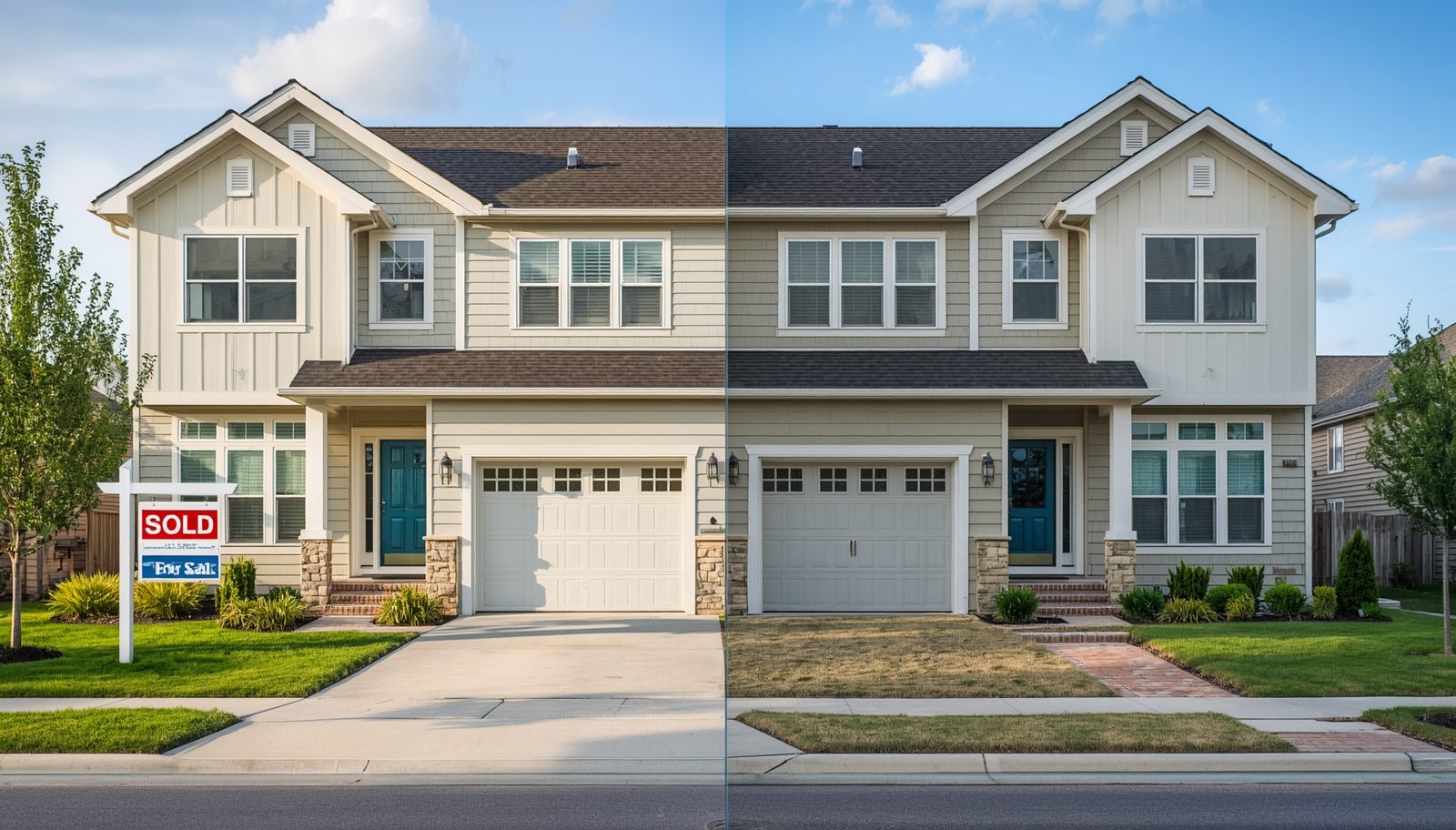
Two homes can share the same street—but strategy is what determines whether one sells in days and the other lingers for months.
The Reality Most Sellers Don’t Expect
It’s one of the most common (and frustrating) questions sellers have:
“How did that house down the street sell in a weekend… but this one is still sitting?”
Same neighborhood.
Similar square footage.
Maybe even the same builder.
And yet—completely different results.
This isn’t random.
It’s not luck.
And it’s definitely not just “the market.”
It’s strategy, execution, and positioning.
Let’s break down what’s actually happening.
1. Pricing Isn’t Just a Number—It’s a Strategy
Many sellers believe pricing is about getting the most.
In reality, pricing is about:
- Positioning within the current buyer pool
- Creating urgency vs. hesitation
- Driving competition (or avoiding it)
A home priced even slightly above market perception can:
- Sit longer
- Get fewer showings
- Trigger price reductions
- Ultimately sell for less than it could have
Meanwhile, a well-positioned home:
- Attracts attention immediately
- Feels like “a good opportunity” to buyers
- Can generate multiple offers
This is where strategy beats ego every single time.
2. First Impressions Are Doing More Work Than You Think
Buyers don’t “warm up” to a home anymore.
They decide—fast.
Before they even step inside, they’ve already judged:
- Listing photos
- Condition
- Perceived value
- Whether it’s “worth seeing”
Homes that sit often struggle with:
- Poor or dark photography
- Cluttered or overly personalized spaces
- Deferred maintenance
- Lack of visual flow
Homes that sell quickly:
- Feel clean, bright, and intentional
- Photograph beautifully
- Make it easy for buyers to say “yes”
Online presentation isn’t marketing fluff—it’s the first showing.
3. Condition vs. Expectation (This Is a Big One)
Here’s where things get nuanced.
A home doesn’t have to be perfect—but it does need to match buyer expectations for the price point.
If buyers expect:
- Updated kitchen → but see dated finishes
- Move-in ready → but notice repairs needed
- Neutral space → but feel overwhelmed by style
They hesitate.
And hesitation kills momentum.
Meanwhile, a home that aligns expectations:
- Feels “worth it”
- Reduces mental objections
- Keeps buyers emotionally engaged
It’s not about perfection—it’s about alignment.
4. Marketing Isn’t Just “Putting It on the MLS”
Let’s be honest—every home gets listed.
That’s not the differentiator.
What does matter:
- How the home is introduced to the market
- The story it tells
- The exposure it gets in the first 7–10 days
A strong launch includes:
- Professional photography
- Strategic listing copy
- Pre-marketing or “coming soon” buzz
- Targeted digital exposure
Why?
Because the first week on market is when:
- The most eyes see the property
- Buyers perceive it as “new”
- Momentum is created (or lost)
You don’t get a second “first week.”
5. Access Matters More Than You Think
This one is often overlooked.
If it’s hard to show… it’s hard to sell.
Barriers like:
- Limited showing windows
- Strict notice requirements
- Tenant complications
- Pets, odors, or daily disruption
All reduce:
- Buyer traffic
- Agent willingness to show
- Overall opportunity
Homes that sell quickly are:
- Easy to access
- Flexible for showings
- Prepared for consistent traffic
Convenience increases competition.
6. The “Why This One?” Factor
Buyers are always comparing.
Even within the same neighborhood, they’re asking:
“Why this house over that one?”
And if that answer isn’t obvious…
They move on.
Homes that sell fast typically have:
- A standout feature (layout, lot, updates, light)
- A clear value proposition
- A feeling that’s easy to connect to
Homes that sit:
- Blend in
- Feel uncertain in value
- Lack a strong identity
Every listing needs a reason to be chosen.
7. Momentum Is Real (And It Matters)
The longer a home sits, the more buyers start asking:
- “What’s wrong with it?”
- “Why hasn’t it sold?”
- “Should we wait for a price drop?”
Even if nothing is wrong.
Days on market creates a narrative.
Homes that sell quickly:
- Capture attention early
- Build momentum
- Create urgency
Homes that sit:
- Lose energy
- Invite negotiation
- Shift leverage to buyers
The goal isn’t just to list—it’s to launch with impact.
Closing Thoughts
Two homes can look similar on paper—but the experience they create for buyers is entirely different. The homes that sell fastest aren’t always the nicest—they’re the ones positioned most effectively, from pricing to presentation to strategy. And that’s not something you leave to chance—it’s something you plan for.
FAQs
Why didn’t my home sell if another one nearby did?
Even small differences in pricing, condition, photos, or timing can significantly impact buyer behavior. It’s rarely just one thing—it’s the combination.
Should I price higher to leave room for negotiation?
In today’s market, overpricing often leads to fewer showings and longer days on market, which can hurt your final sale price.
Do I really need to update my home before selling?
Not always—but your home should align with buyer expectations for its price point. Strategic updates (or adjustments) can make a big difference.
How important are listing photos, really?
Extremely. Most buyers decide whether to see a home based on photos alone.
What’s the biggest mistake sellers make?
Waiting too long to adjust—whether it’s price, presentation, or strategy—after the market has already given feedback.