Facebook
 X
X
 Pinterest
 Copy Link
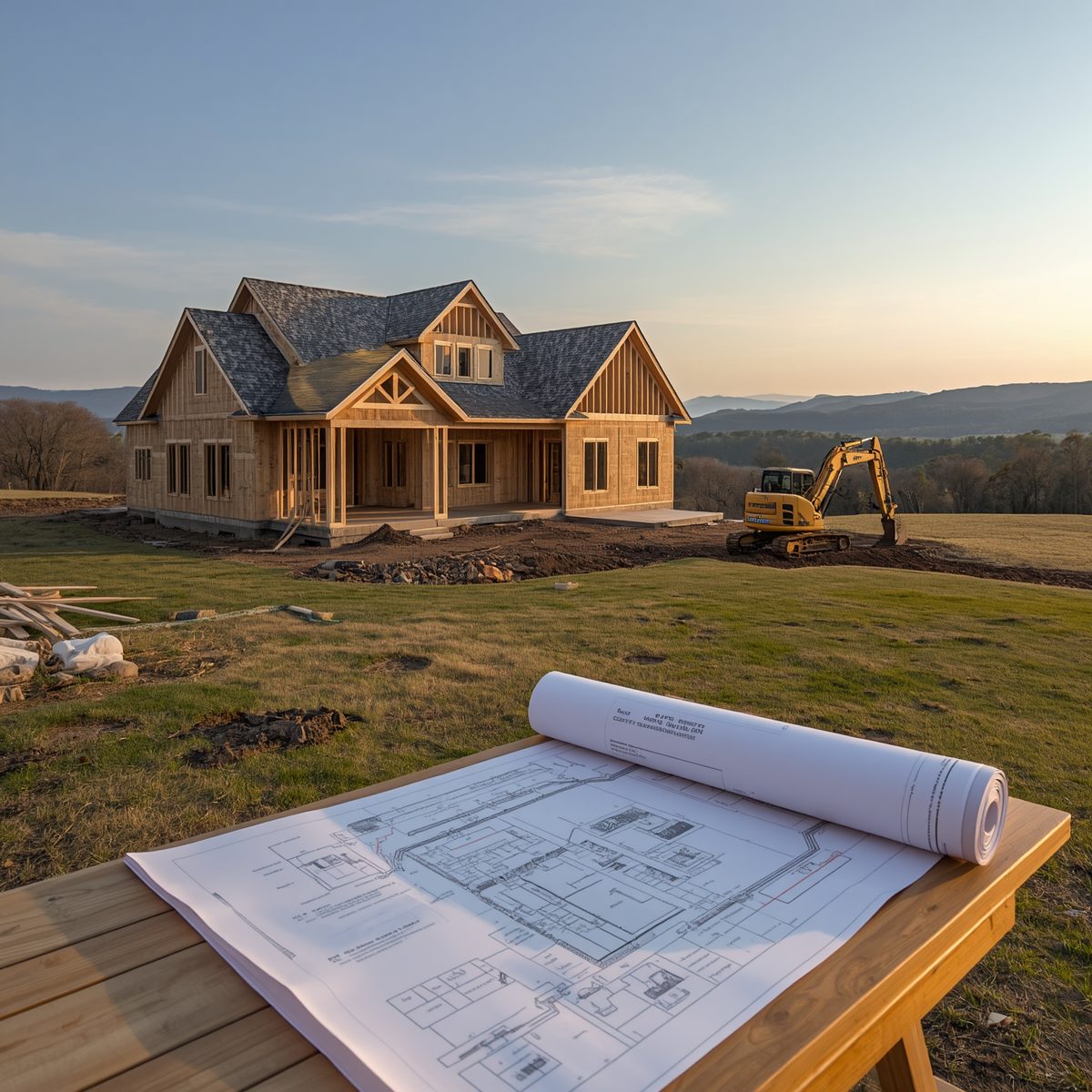
For many people, building a custom home is the ultimate real estate dream.
You find the perfect piece of land, design the perfect floor plan, choose every finish, and create a home that’s uniquely yours.
And honestly? It can be an incredible experience.
But it can also be one of the most complex, unpredictable, and emotionally demanding paths to homeownership.
As someone who enjoys helping clients explore land purchases, rural properties, and new construction opportunities throughout Virginia and West Virginia, I’ve noticed that many buyers focus heavily on the home itself while underestimating everything that happens before construction even begins.
The reality is that building a custom home isn’t simply purchasing a house.
It’s managing a project.
Understanding that difference from the beginning can make all the difference in whether the experience feels exciting or overwhelming.
Before You Build a House, You’re Really Developing Land
One of the biggest misconceptions about custom construction is that once you’ve purchased a piece of land, you’re ready to start building.
In reality, the land often determines what can be built, where it can be built, and how much it will cost to build.
This is one reason I frequently encourage buyers to look beyond the purchase price of a parcel and evaluate the property’s overall feasibility.
In my article, “Understanding Well and Septic Systems in the Winchester and Shenandoah Valley Real Estate Market,” I explain how what lies beneath a property can be just as important as what sits on top of it. When you’re building a custom home, that reality becomes even more important because soil conditions, well placement, septic feasibility, drainage concerns, and utility access can all affect both your budget and your building plans.
Questions that often need answers include:
- Where will the well be located?
- Will the property support a conventional septic system?
- Is electricity readily available?
- Are there drainage concerns?
- Are there easements or setbacks that impact building locations?
- What type of excavation will be required?
The land itself may ultimately dictate many of the decisions that follow.
The Budget Number Isn’t Always the Final Number
This is where I find many buyers get caught off guard.
When purchasing an existing home, the purchase price is generally known upfront.
Custom construction is different.
While builders work hard to provide accurate estimates, construction projects often involve variables that simply can’t be fully understood until work begins.
One homeowner I know planned a basement foundation in a specific location on their lot. Once excavation began, substantial rock formations were discovered beneath the surface.
The options were simple:
- Move the house location.
- Or pay the significant expense of blasting and removing rock.
Neither option was part of the original plan.
Another project encountered challenges while drilling a well. The anticipated depth wasn’t sufficient to provide an adequate water supply, requiring substantially deeper drilling than expected and adding thousands of dollars to the budget.
Neither project involved poor decisions.
Neither involved bad planning.
They simply encountered conditions that couldn’t be fully confirmed until work started.
This is one reason I encourage buyers to approach custom construction differently than they would an existing home purchase. Unlike a traditional transaction, some of the most important discoveries happen after the project begins.
Why Tight Budgets and Custom Builds Can Be a Difficult Combination
This may be the most important point in this entire article.
If your budget absolutely cannot move under any circumstances, custom building may not be the ideal path.
That doesn’t mean you shouldn’t build.
It simply means you should understand the realities involved.
Construction projects often include variables related to:
- Site work
- Excavation
- Utility installation
- Well drilling
- Septic installation
- Material costs
- Weather delays
- Permit timelines
In “The Hidden Costs of Buying a Home (That No One Talks About Enough),” I discuss many of the expenses buyers overlook when purchasing an existing property. Custom construction takes that concept a step further because you’re not only buying a home—you’re creating one. The opportunities for unexpected costs are simply greater, which makes having a contingency reserve incredibly important.
The buyers who tend to enjoy the process most are usually those who have flexibility built into both their budget and timeline.
A contingency reserve isn’t a luxury during a custom build.
It’s often a necessity.
The House Isn’t the Only Cost
When buyers begin researching custom construction, most naturally focus on the home itself.
The floor plan.
The finishes.
The square footage.
The kitchen.
The porch.
The primary suite.
What often gets overlooked are the site-development expenses that occur before the first wall is framed.
Depending on the property, buyers may encounter costs associated with:
- Tree clearing
- Driveway installation
- Grading
- Excavation
- Septic systems
- Wells
- Utility connections
- Stormwater management
- Retaining walls
I’ve had conversations with buyers who were surprised to learn that two lots priced similarly could have dramatically different development costs.
The land matters.
Sometimes it matters more than the house plan.
This is why evaluating land properly before purchase is so important. A “cheaper” lot can sometimes become the more expensive project once development costs are fully understood.
Construction Financing Is Different
Financing a custom build doesn’t typically follow the same process as purchasing an existing home.
Construction projects often involve:
- Construction-to-permanent loans
- One-time close loans
- Draw schedules
- Builder approval requirements
- Additional lender oversight
In “USDA, FHA, VA, Conventional: Which Loan Actually Fits You Best?“, I discuss how different loan products serve different buyer needs. Building a custom home adds another layer to that conversation because construction financing often involves requirements and timelines that don’t exist when purchasing a resale home.
The financing structure itself can have a major impact on the success of the project.
That’s why I encourage buyers to speak with knowledgeable construction lenders early in the process rather than waiting until they’ve already purchased land.
The right lender can make an enormous difference during a custom build.
The Change Order Trap
One of the greatest benefits of custom construction is personalization.
It’s also one of the biggest budget risks.
A larger island doesn’t seem like much.
Neither does upgrading flooring.
Or adding additional windows.
Or extending a porch.
Or changing cabinetry.
The challenge is that construction projects rarely involve just one change.
They often involve many.
I’ve worked with clients who discovered that what looked perfect on paper felt completely different once framing was complete and rooms became visible in real life.
Making adjustments during construction is possible.
But adjustments almost always affect one of three things:
- Cost
- Timeline
- Both
That’s why having realistic expectations before construction begins is so important.
Building Isn’t Better. Buying Isn’t Better.
One thing I consistently tell clients is that there is no universally “right” path.
Sometimes a custom build makes perfect sense.
Sometimes an existing home is the better choice.
One of the themes I revisit frequently is that there are very few one-size-fits-all answers in real estate. The best decision is always the one that aligns with your goals, finances, timeline, and comfort level.
A custom build may be ideal if:
- You want specific features unavailable in existing homes.
- You have a longer timeline.
- You have budget flexibility.
- You want complete personalization.
An existing home may be a better fit if:
- You need certainty.
- You need a quicker move.
- Your budget has little room for variation.
- You prefer fewer variables.
Neither choice is superior.
They’re simply different paths to achieving your goals.
Expectations Create Better Experiences
Most construction frustrations don’t happen because something went wrong.
They happen because expectations didn’t match reality.
Custom home construction can be exciting.
It can also be stressful.
Sometimes it can be both on the same day.
In “The Psychology of Homebuying: How Buyer Perception Shapes Every Showing,” I discuss how expectations influence the way buyers experience the home-buying process. The same principle applies to custom construction. Buyers who expect a perfectly linear process often find every obstacle frustrating. Buyers who understand that adjustments, decisions, and occasional surprises are part of the journey tend to enjoy the experience much more.
That isn’t a flaw in the process.
It’s simply part of building something from the ground up.
Frequently Asked Questions
How much extra money should I set aside when building a custom home?
Every project is different, but having contingency funds available beyond your projected budget is highly recommended. Unexpected site conditions, material changes, and upgrades can all impact final costs.
Is building a home more expensive than buying one?
In many cases, yes. However, costs vary significantly depending on land prices, site-development requirements, construction quality, and location.
Can I finance the land and home together?
Often, yes. Construction-to-permanent and one-time close loan programs may allow buyers to finance both within a single loan structure.
What causes the biggest budget surprises?
Site work is often one of the largest sources of unexpected costs. Well depth, rock formations, drainage issues, utility installation, and change orders can all affect budgets.
Is custom building worth it?
For many homeowners, absolutely. The key is entering the process with realistic expectations regarding budget, timelines, and flexibility.
Closing Thoughts
I genuinely love custom homes.
There’s something incredibly rewarding about watching a vision become reality and seeing a client walk through a home designed specifically for their lifestyle.
But I’ve also learned that successful custom builds aren’t necessarily the projects without surprises.
They’re the projects where buyers understood from the beginning that surprises are possible.
If you’re considering purchasing land, building a custom home, or simply exploring whether new construction is the right fit, the goal shouldn’t be to avoid every challenge.
The goal should be understanding the process well enough to navigate those challenges confidently when they arise.
Because sometimes the most important decision in a custom build isn’t choosing the floor plan.
It’s deciding whether building is truly the right path for you in the first place.