Facebook
 X
X
 Pinterest
 Copy Link
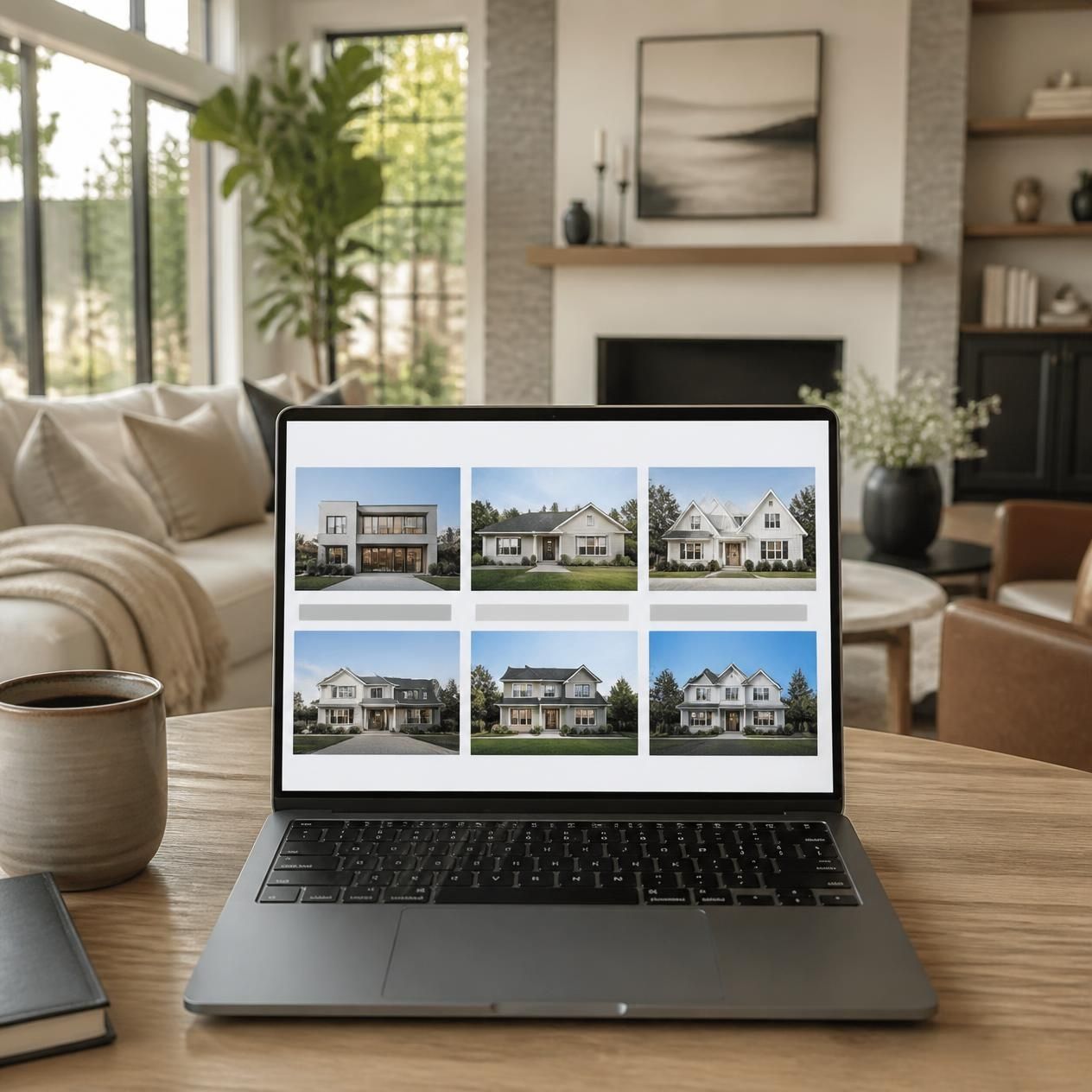
One of the biggest misconceptions sellers can have is that buyers will come see a home and then decide what they think about it.
Usually, the decision-making starts much earlier.
Before a buyer schedules a showing, they may have already compared your home to several others. They have looked at the photos. They have studied the price. They have noticed the finishes, the condition, the room sizes, the yard, the location and whatever else they can gather from the listing.
They may have zoomed in on photographs.
They may have pulled up the property on a map.
They may have compared your kitchen to the kitchen three listings down.
And sometimes, without ever walking through your front door, they have already decided whether your home makes the cut.
That means your home’s first showing isn’t necessarily the first appointment on the calendar.
Its first showing is often the listing itself.
Buyers Are Shopping Before They’re Showing
Today’s buyers have an enormous amount of information available before they ever contact their agent about seeing a property.
That’s incredibly convenient for buyers, but it changes the way sellers need to think about preparing and positioning a home.
A buyer isn’t usually looking at your property in isolation.
They may be looking at:
- Your home at $475,000
- Another home at $465,000 with an updated kitchen
- One at $485,000 with a larger yard
- Another at $470,000 that photographs beautifully
- One that has been sitting on the market longer and just reduced its price
Whether those homes are truly comparable from a real estate valuation perspective isn’t necessarily what matters during this stage.
They’re comparable in the buyer’s mind because they’re competing for the same buyer.
That’s an important distinction.
Your Competition Isn’t Just the House Next Door
When I’m preparing a pricing or listing strategy, I’m obviously looking at comparable sales.
But I’m also looking at something else:
What will a buyer see when they search at this price point?
Those are not always the same properties.
A buyer may be willing to consider several neighborhoods, different home styles, a slightly longer commute or even a neighboring county if the alternatives seem compelling enough.
Here in the Winchester and Shenandoah Valley market—and particularly when buyers are also considering communities across the Eastern Panhandle of West Virginia—that search can cover a surprisingly large geographic area.
Being dual-licensed in Virginia and West Virginia gives me an interesting perspective on this because I regularly see buyers compare options across both states.
Your competition, therefore, isn’t simply the most similar house that sold six months ago.
It’s also the homes buyers can choose right now.
The Listing Photos Are Doing More Work Than You Think
Professional photography isn’t simply about making a house look pretty.
The photographs have a job.
They need to help a buyer understand the home, move naturally through it visually and become interested enough to want the experience they can’t get from the screen.
That is why preparation before photography matters.
A cluttered counter can make a kitchen feel smaller.
Too much furniture can obscure how a room functions.
Dark photographs can change the perceived feeling of a space.
An awkward first image can make an otherwise wonderful property easier to scroll past.
And the opposite is true, too.
Good preparation and thoughtful photography can help buyers understand what makes a property special.
And then there are the photos that unintentionally become memorable for entirely different reasons—the thumb sneaking into the corner of the frame, the photographer reflected in the bathroom mirror, or my personal favorite: the FSBO seller accidentally starring in their own listing photos. Funny? Absolutely. But when buyers are scrolling from one property to the next, those little things also highlight the difference between simply putting a house online and intentionally presenting it for sale. Professional photography and thoughtful property tours aren’t about making a home look like something it isn’t; they’re about making sure the home is what buyers notice.
The goal isn’t to create something that doesn’t exist, or highlight someone in the home that does.
The goal is to present what does exist as clearly and effectively as possible.
Buyers Are Constantly Calculating Value
Price is obviously part of the equation, but buyer perception of value is much more complicated than price alone.
Imagine two houses listed at the same price.
One appears clean, bright, well maintained and ready for someone to move in.
The other appears to need painting, landscaping, new flooring and several smaller projects.
Even if the actual cost of those projects isn’t enormous, buyers may perceive a much larger difference.
Why?
Because buyers aren’t just calculating dollars.
They’re calculating effort, uncertainty and opportunity cost.
They may be thinking:
How much work will this be?
How quickly can I move in?
What else am I going to discover?
Why would I choose this one when the other house seems easier?
That’s buyer psychology, and it matters.
Small Things Can Become Big Things Online
There are things buyers may barely notice while standing inside a home that become surprisingly prominent in photographs.
Countertop clutter.
Too many decorative items.
Personal collections.
Cords.
Overfilled bookshelves.
An unmade bed.
A trash can in the middle of the kitchen photograph.
A toilet lid left open.
None of these things changes the underlying value of a property.
But selling a home isn’t only about underlying value.
It’s also about presentation and perception.
When someone is physically inside a home, their brain processes hundreds of details simultaneously—the layout, natural light, ceiling height, sounds, finishes, scale and overall feeling of the space.
A photograph removes most of that context.
Suddenly, the small distraction becomes much more noticeable.
That’s one reason I look at preparation through the camera’s eye, not just through the eyes of someone standing in the room.
Pricing Changes Who You’re Competing Against
Pricing strategy adds another layer.
Every price point places a property into a competitive environment.
Move the price and the competitive set can change.
That is one reason pricing isn’t simply:
“What do you think my house is worth?”
A better conversation includes:
“What happens at this price?”
What homes appear alongside yours?
What alternatives does a buyer have?
Does your property compare favorably?
What expectations come with that price range?
And what happens if we move slightly higher or lower?
This is part of why pricing strategy requires more than simply looking at recent sales and choosing a number. I want to understand what buyers will see when your home enters the market, what alternatives they’ll have at that price point, where your property has an advantage, and where buyers may perceive greater value somewhere else. The right price doesn’t exist in a vacuum—it has to make sense within the competitive environment your home is entering.
My Pricing Strategy Advisor (PSA) training reinforces this approach, but experience matters too. After more than 150 home sales, I’ve seen repeatedly how the market responds when price, presentation and buyer expectations align—and what happens when they don’t.
You Don’t Need to Make Your Home Perfect
Thoughtful preparation doesn’t mean renovating everything before you sell. In fact, spending money simply for the sake of making updates can be just as misguided as doing nothing at all.
Sometimes the right recommendation is paint.
Sometimes it’s moving furniture.
Sometimes it’s landscaping.
Sometimes it’s fixing something buyers are likely to question.
Sometimes it’s doing absolutely nothing to a particular feature because the cost won’t meaningfully improve your position.
And sometimes the smartest strategy is simply acknowledging a property’s condition and pricing accordingly.
My job isn’t to hand every seller an enormous pre-listing renovation checklist.
It’s to help determine which things actually matter for your house, your market, your competition and your goals.
The Goal Is to Give Buyers Reasons to Keep Going
Think about the online home search as a series of small decisions.
A buyer sees the first photo.
Keep looking or scroll past?
They open the listing.
Look through the photos or go back to the search results?
They read the details.
Save it or dismiss it?
They compare it with another property.
Which one looks more compelling?
They send it to their agent.
Is this worth seeing?
Eventually:
Schedule the showing or don’t?
Your listing needs to survive that sequence.
We can’t control every buyer’s preferences. We shouldn’t try.
The objective is to make sure the buyers who could be a fit have enough reason to keep moving forward.
FAQs
Should I renovate my home before putting it on the market?
Not necessarily. The right improvements depend on the property’s condition, likely buyer expectations, competition, price point and your goals. Some homes benefit from targeted updates; others need only thoughtful preparation and presentation.
How important are listing photos when selling a home?
Very. Buyers often use listing photography as one of their first filters when deciding which properties deserve further consideration. Photography should accurately and effectively communicate the home’s layout, condition and strongest features.
Should I price my home based only on recently sold comparable properties?
Comparable sales are an important part of pricing analysis, but current competition matters too. Buyers will compare your property with homes available to them now, so a thoughtful pricing strategy should consider both historical market evidence and today’s alternatives.
Can buyers really reject a house without seeing it?
Absolutely. Online listings allow buyers to eliminate properties quickly based on price, location, photographs, condition, features and perceived value. That is precisely why the home’s digital presentation deserves attention before the listing goes live.
How do I know which improvements are worth making before I sell?
That conversation should happen before you start spending money. I prefer to evaluate the home, likely buyer pool, competing inventory and your objectives first. From there, we can prioritize the changes most likely to matter and skip the ones that probably won’t.
Closing Thoughts
Your home doesn’t enter the competition when the first buyer walks through the front door.
It enters the competition the moment it appears in their search.
That changes how I think about listing preparation.
We’re not trying to create an imaginary perfect house. We’re not renovating simply because we can. And we’re certainly not making decisions without considering what buyers will see around us.
We’re looking at the home through a buyer’s eyes before the buyer ever sees it in person.
What will they compare?
What will they notice?
What might give them pause?
What makes your home compelling?
And most importantly:
What will make the right buyer want to take the next step?
That’s the strategy behind the preparation.
And it starts long before the first showing.