Facebook
 X
X
 Pinterest
 Copy Link
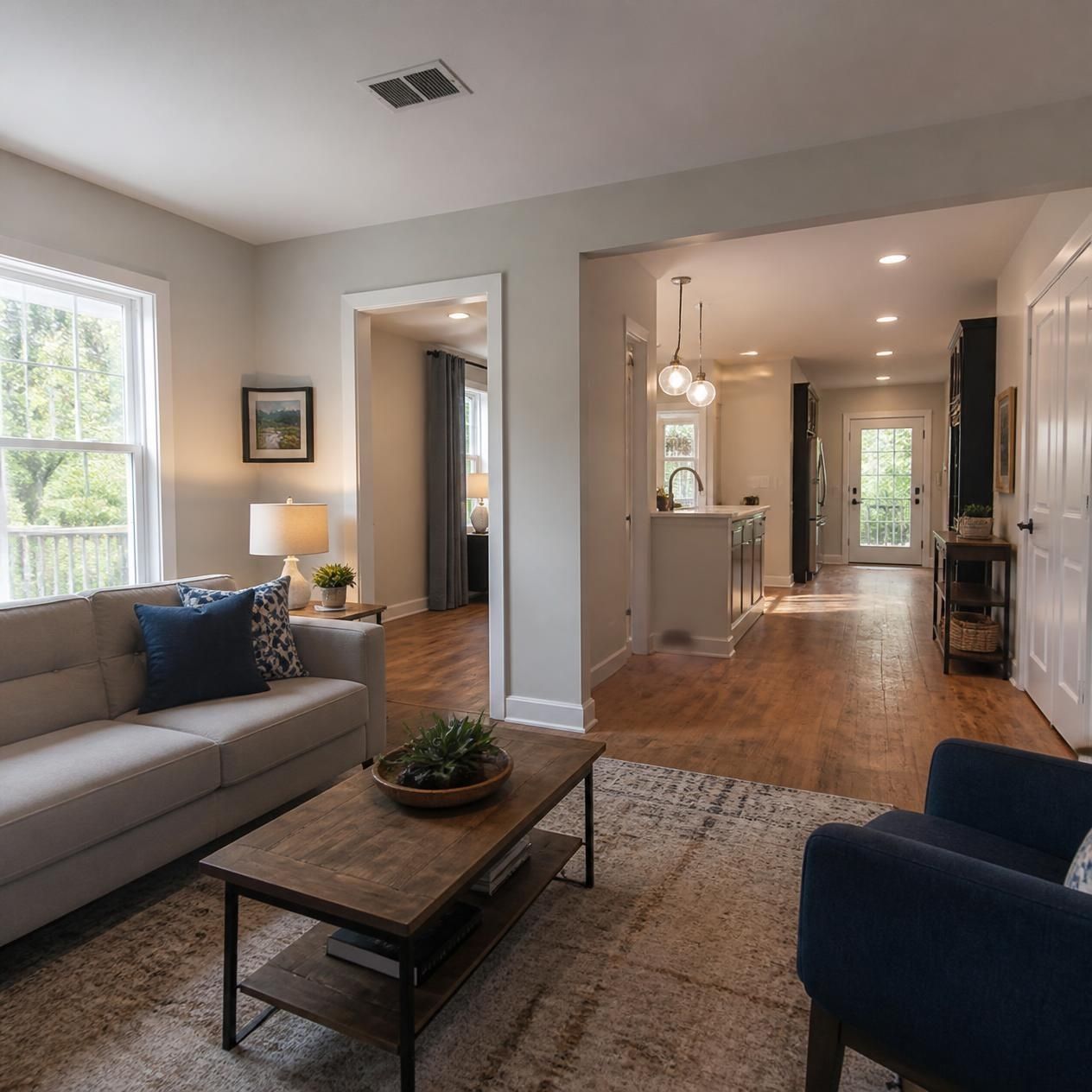
It is incredibly easy to walk into a house and immediately notice the pretty stuff.
The kitchen has been updated. The floors look great. The paint colors are perfect. The furniture is beautifully staged. There is natural light pouring through the windows, and you can already picture your coffee maker on the counter.
None of those things are irrelevant. You should absolutely pay attention to how a home makes you feel.
But when I walk through a house with a buyer, I am looking at a lot more than the finishes.
I am paying attention to the things that may affect how the home lives, what it may need, what could become expensive later, and—perhaps most importantly—what you can and cannot reasonably change.
Because beautiful countertops can be replaced.
A bad location cannot.
Here are some of the things I encourage buyers to notice while we are actually standing inside the house.
Start With the Things You Cannot Change
Before we get distracted by anything inside, I want to think about the property itself.
Where is the house located within the neighborhood? What surrounds it? Is there road noise? How close are the neighboring homes? What does the lot look like? Is the yard usable for the way you actually want to use it?
Pay attention as you arrive, not just after you walk through the front door.
Look at the neighboring properties. Notice traffic. Look at the slope of the lot. Think about the driveway.
And remember that location is more than the town or neighborhood name.
Two homes in the same subdivision can offer very different experiences depending on exactly where they sit.
You can renovate a kitchen.
You cannot renovate where the house is sitting.
Look at the Layout Without the Furniture
Staging can be incredibly effective because it helps buyers understand how a room could function.
It can also make it harder to objectively evaluate the space.
Try mentally removing the furniture.
Where would your furniture go?
Can you comfortably walk through the room? Are there awkward doorways or traffic patterns? Does the dining area actually accommodate the size table you use? Is there enough wall space for your furniture?
Think about how you live from morning to night.
Where do groceries come into the house? Where do coats and shoes go? Is the laundry location practical? If you work from home, where would that happen?
A floor plan does not need to be perfect. But changing a floor plan can be considerably more complicated and expensive than changing finishes.
Pay Attention to Natural Light
Lighting fixtures and lamps can make almost any home feel bright during a showing.
Look beyond them.
How much natural light is actually coming into the rooms?
Consider the number and placement of windows, which rooms feel naturally bright or dark, and whether neighboring homes, trees, porches or other structures affect the light.
This becomes especially important when something about the home matters to you personally.
If you love houseplants, paint, work from home, read by a window or simply know that dark rooms affect how you feel about a space, natural light may matter far more than the light fixtures currently hanging from the ceiling.
Look Up, Down and Around
Most buyers naturally look straight ahead.
Train yourself to look everywhere else, too.
Look at ceilings for staining or discoloration. Look at floors for unusual slopes, damage or transitions. Look around windows and doors. Notice cracks and where they appear.
None of these observations automatically means there is a serious problem.
That distinction matters.
A showing is not a home inspection, and neither you nor your real estate agent should be trying to diagnose a house based on a quick visual observation.
But we can notice things.
And when something deserves a closer look, we can make sure the appropriate professional evaluates it as part of your due diligence.
Notice How the House Has Been Maintained
I pay attention to the overall pattern of maintenance.
One imperfect item does not necessarily concern me. Homes are lived in, and virtually every property will have something that needs attention.
But several small neglected items can begin to tell a story.
Are doors sticking? Is exterior trim deteriorating? Are gutters overflowing? Are there obvious repairs that have been deferred? Do repairs appear professionally completed, or are there questionable DIY solutions throughout the property?
Maintenance tells us something about how the home has been cared for.
That does not automatically make a poorly maintained home a bad purchase.
It simply becomes part of the information we use when deciding what questions to ask next.
Pay Attention to Water
Water deserves attention both inside and outside a home.
Outside, look at how the land slopes and where water appears likely to travel. Notice gutters, downspouts and drainage around the foundation.
Inside, look for staining, discoloration or signs of previous moisture around ceilings, windows, plumbing fixtures and lower-level spaces.
Again, seeing something does not mean we diagnose it on the spot.
It means we ask questions.
Sometimes there is a perfectly reasonable explanation. Sometimes further investigation is warranted.
The important thing is noticing it in the first place.
Find the Systems
Pretty kitchens tend to get more attention than mechanical rooms.
I am interested in both.
Where are the HVAC systems? How old do they appear to be? Where is the electrical panel? What type of water heater does the property have? If the home has a well or septic system, where are those components located?
You do not need to become an expert in mechanical systems during a showing.
You should, however, understand that these systems are part of what you are buying.
A dated bathroom may be obvious.
A major system approaching the end of its expected useful life may be much easier to overlook when you are excited about the house.
Use Your Other Senses
A showing is not only visual.
What do you hear?
Stand quietly for a moment. Can you hear traffic? Trains? Nearby businesses? Dogs? Mechanical equipment?
What do you smell?
Heavy fragrances do not necessarily mean someone is hiding something—sometimes people simply like air fresheners—but strong scents can make it more difficult to notice other odors.
Does the house feel unusually humid?
These observations may not lead anywhere at all. But your senses can give you useful information that photographs never will.
Think About Storage Honestly
Storage is one of those things buyers sometimes assume they will “figure out later.”
Open the closets.
Look at the pantry.
Think about where holiday decorations, luggage, sports equipment, tools, vacuum cleaners and all of the other decidedly unglamorous parts of life are going to live.
A beautifully staged house contains a carefully edited amount of stuff.
Your real life probably contains more.
Separate Cosmetic Problems From Expensive Problems
This is one of the most valuable skills a buyer can develop.
Ugly paint is cheap.
A dated light fixture is easy.
Cabinet hardware can be changed.
Even some larger cosmetic projects may be manageable over time.
The question I want buyers asking is not simply:
“Do I like what I see?”
It is:
“What would it take to make this house work for me?”
Sometimes the house with the prettiest finishes is not actually the best fit.
And sometimes the house everyone scrolls past because of paint, wallpaper or dated décor has the location, layout, lot, light and fundamentals that are much harder to find.
Do Not Try to Conduct the Home Inspection During the Showing
There is an important balance here.
I want buyers to be observant.
I do not want them to feel responsible for identifying every possible defect in a property during a 30-minute showing.
That is not your job.
The purpose of noticing these things is to make a more informed decision about whether the property deserves further consideration and what questions we may want answered.
If you decide to pursue the home, inspections and other appropriate professional evaluations give us the opportunity to learn more.
My job during the showing is to help you look beyond the presentation, ask good questions and think about the property through the lens of your goals, your budget and your tolerance for the work it may require.
FAQs
Should I bring a checklist to every home showing?
You certainly can, especially if it helps you compare multiple properties objectively. I also recommend taking notes immediately after each showing because homes can start blending together surprisingly quickly.
Is it a red flag if I notice a crack, stain or repair?
Not necessarily. Visual observations are clues, not diagnoses. The location, cause, severity and history matter, which is why questions and appropriate professional evaluation are important.
Should buyers care about cosmetic updates?
Absolutely. If you do not want to renovate, the condition and finishes of a home may be very important to you. The goal is not to ignore pretty things—it is to make sure they are not distracting you from the rest of the property.
What should I prioritize if a home needs updating?
Start with the things that are hardest or impossible to change: location, lot, general layout and other fundamental characteristics. Then consider the condition of the home, its systems, the scope of desired improvements and whether those costs make sense within your overall budget.
Can my real estate agent tell me whether something is structurally wrong?
A real estate agent can point out observations and help you identify questions that need answers, but specialized issues should be evaluated by the appropriate qualified professional. Good representation includes knowing when another expert needs to enter the conversation, and staying within the scope of expertise.
Closing Thoughts
A showing should be exciting. There is nothing wrong with walking into a beautiful kitchen and loving it.
I just want you to notice the basement, too.
Buying well means looking at the entire property—not just the parts that photograph beautifully.
We can change paint. We can replace fixtures. We can update flooring and renovate rooms over time.
What deserves more attention are the things that affect how the home functions, what it may cost to own, and whether it actually supports the way you want to live.
That is why I ask questions during showings. It is why I may point something out while everyone else is admiring the countertops. And it is why I want my buyers to leave a showing with more than an emotional reaction.
My job is to help you see the whole house so you can make a confident decision about whether it should become your home.
Your Goals. Thoughtful Strategy. Confident Decisions.