Facebook
 X
X
 Pinterest
 Copy Link
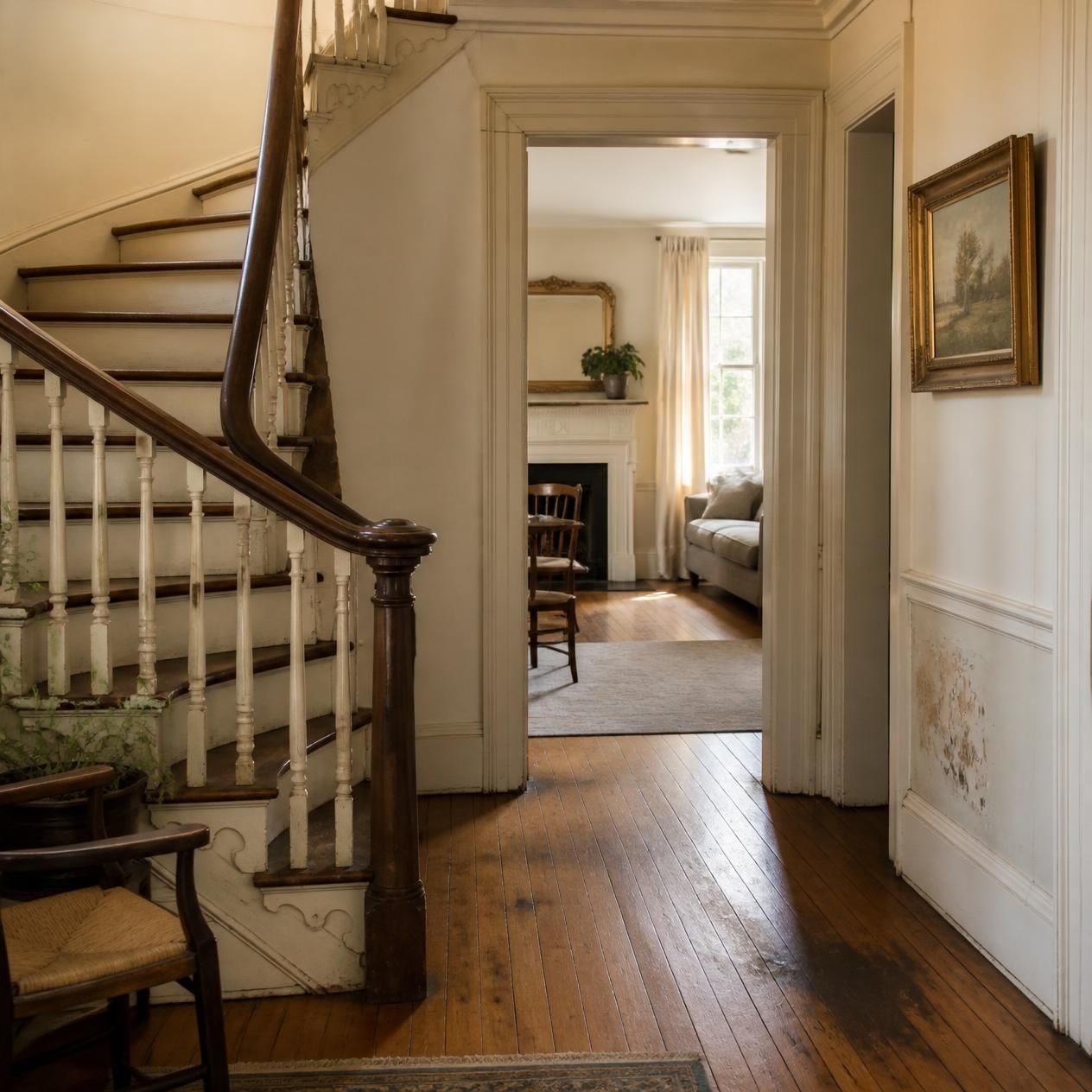
Walk through enough houses and you will eventually hear some version of this:
“This house needs a lot of work.”
But what does that actually mean?
Sometimes it means the kitchen is twenty years past its prime, the carpet has seen better days, and every wall is painted a color you would never choose.
Sometimes it means there are signs of water intrusion, questionable electrical work, significant structural movement, or multiple major systems approaching the end of their useful lives.
Those are two very different conversations.
One of the most important things I help buyers do during a showing is separate things they don’t like from things we need to understand.
Because an ugly house isn’t necessarily a bad house.
And a beautiful house isn’t necessarily a good one.
Start With the Question: Cosmetic, Maintenance, or Something Bigger?
I don’t expect buyers to diagnose houses during a showing. That’s not your job, and it isn’t mine either. That’s why we have qualified home inspectors and, when necessary, specialized contractors and other professionals.
But we can pay attention.
I generally think about what we’re seeing in three broad categories:
1. Cosmetic
These are the things that may make you dislike a house immediately but don’t necessarily tell us much about its underlying condition.
Think:
- Paint colors
- Wallpaper
- Dated light fixtures
- Old carpet
- Unattractive countertops
- Cabinet finishes
- Dated bathrooms
- Landscaping you don’t love
These things can absolutely cost money to change. That matters, especially if you’re already stretching your budget to purchase the house.
But there’s a difference between “I need $15,000 to make this house look the way I want” and “I don’t yet know what it will cost to address what we’re seeing.”
The first is primarily a budgeting decision.
The second requires more investigation.
2. Deferred Maintenance
This is where things get more interesting.
Deferred maintenance is what happens when the ordinary responsibilities of owning a house haven’t been handled consistently.
Maybe the deck needs attention. The gutters are packed. Exterior trim is deteriorating. Caulking has failed. An HVAC system is older. A small plumbing leak appears to have been ignored.
None of those things automatically makes the house a bad purchase.
But I pay attention to the pattern.
One neglected item may simply be one neglected item.
Ten neglected items make me wonder what else hasn’t been maintained.
That doesn’t mean we panic. It means we start asking better questions.
Then There Are the Things That Make Me Slow Down
A real red flag isn’t necessarily a deal breaker.
It’s a reason to stop making assumptions.
If we see something that could indicate a structural issue, recurring moisture problem, electrical concern, drainage problem, roof failure, significant plumbing issue, or another potentially expensive condition, I don’t want to guess what it means.
I want more information.
That may come from the home inspection. It may mean asking the inspector whether another qualified professional should evaluate something further. It may mean reviewing available documentation, permits, disclosures, repair records, or other information.
The goal isn’t for me to tell you, “That’s nothing.”
And it isn’t for me to tell you, “Run.”
The goal is to figure out what we actually know before you make a decision.
One Problem Is Different From a Pattern
This is one of the biggest distinctions I make when looking at homes with buyers.
A water stain doesn’t automatically tell us why it happened.
Maybe a toilet overflowed once ten years ago.
Maybe a roof leaked and was properly repaired.
Maybe there is an active moisture problem.
Those possibilities are very different.
But now imagine we see staining in several areas, a musty smell in the basement, efflorescence on a foundation wall, damaged trim near an exterior door, and grading that appears to direct water toward the house.
Now we have a pattern worth investigating.
The same principle applies elsewhere.
One cracked tile? Maybe not particularly meaningful.
Multiple doors that don’t close correctly, noticeable sloping, significant cracking, and evidence of prior structural repairs?
I have more questions.
A clue deserves attention. A collection of clues deserves investigation.
Pretty Can Distract You, Too
Buyers sometimes think the risky house is the obviously neglected one.
Not necessarily.
Fresh paint, new flooring, trendy fixtures, beautiful countertops, and staging can make a house feel reassuring.
But finishes don’t tell us the age of the roof.
They don’t tell us why part of the basement was recently painted.
They don’t tell us whether the electrical system has been properly updated.
They don’t tell us what is happening in the crawl space.
And they don’t tell us whether that gorgeous renovated bathroom was completed correctly.
This is why I want buyers looking beyond the pretty stuff during a showing.
Enjoy the kitchen. Love the floors. Picture your furniture in the living room.
But let’s also look around.
The Price Has to Be Part of the Conversation
A house needing work isn’t inherently a problem if the condition is appropriately reflected in the price and the buyer has the budget, time, ability, and appetite to take it on.
That’s the part people sometimes forget.
A $450,000 house needing $50,000 worth of work isn’t automatically a worse purchase than a turnkey $500,000 house.
It also isn’t automatically a better one.
We have to understand what the work is, how urgent it may be, how much uncertainty we’re accepting, and whether the overall numbers and circumstances make sense for you.
This is where strategy becomes much more useful than simply labeling a property a “fixer-upper.”
What Happens When We See Something Concerning?
We investigate.
That’s it.
Not panic.
Not minimize.
Investigate.
A home inspection is an important part of that process. Depending on what is discovered, an inspector may recommend additional evaluation by an appropriate specialist.
That information gives us something much more useful than fear or optimism: context.
Then we can talk about your options based on the property, your contract, the findings, your financing, and your priorities.
Sometimes the information confirms that something is relatively manageable.
Sometimes it changes how we think about the house.
And sometimes a buyer decides that even a completely repairable problem is simply more than they want to take on.
That’s a valid decision, too.
The Real Question Isn’t “Can This Be Fixed?”
Most things can.
The better questions are:
What is actually wrong?
What will it reasonably take to address it?
What else could be connected to it?
How much uncertainty remains?
Does the price make sense given what we now know?
And perhaps most importantly:
Is this a project YOU want to own?
Because two buyers can look at exactly the same house and make two completely reasonable, completely different decisions.
One sees an opportunity.
The other sees three years of projects they never wanted.
Neither one is necessarily wrong.
FAQs
Should I avoid any house with foundation cracks?
Not automatically. Cracks can have different causes and different levels of significance. What matters is understanding what you’re seeing rather than diagnosing it during a showing. If there are concerns, a home inspector and, when appropriate, a qualified specialist can help determine whether further evaluation is warranted.
Is an old roof automatically a red flag?
Age matters, but age alone doesn’t tell us everything about condition. An older system or component may simply be something you need to budget for. The bigger question is its current condition, remaining useful life, and whether there are signs of failure or related damage.
What if the inspection report is really long?
Length alone doesn’t tell you how serious the findings are. Inspection reports can include maintenance recommendations, minor defects, safety observations, aging components, and larger concerns. I would rather help you understand and prioritize the findings than count how many pages are in the report.
Can a renovated house still have serious problems?
Absolutely. New finishes tell you that the finishes are new. They don’t automatically tell you the condition of the structure, roof, plumbing, electrical, drainage, HVAC, or work hidden behind walls. Renovated homes deserve thoughtful evaluation just like every other home.
Should I walk away if the inspector finds a major problem?
Not necessarily. First, understand the problem. Depending on your contract and circumstances, there may be several options to consider. The important part is making that decision with as much reliable information as possible rather than reacting to the word “major.”
Closing Thoughts
I don’t need a house to be perfect before I’ll tell a buyer it’s worth considering.
Frankly, perfect houses are pretty hard to find.
What I want is for my buyers to understand the difference between work they can see and evaluate and warning signs that deserve more investigation.
Sometimes ugly is just ugly.
Sometimes old is simply old.
Sometimes a long inspection report is mostly a roadmap for future maintenance.
And sometimes several seemingly small observations start telling a much bigger story.
My job isn’t to make that decision for you. It’s to notice, ask questions, help gather the right information, and make sure we’re looking at the whole picture before you make yours.
Your Goals. Strategic Guidance. Confident Decisions.
Detail Oriented. Experience Focused. Results Driven.