Facebook
 X
X
 Pinterest
 Copy Link
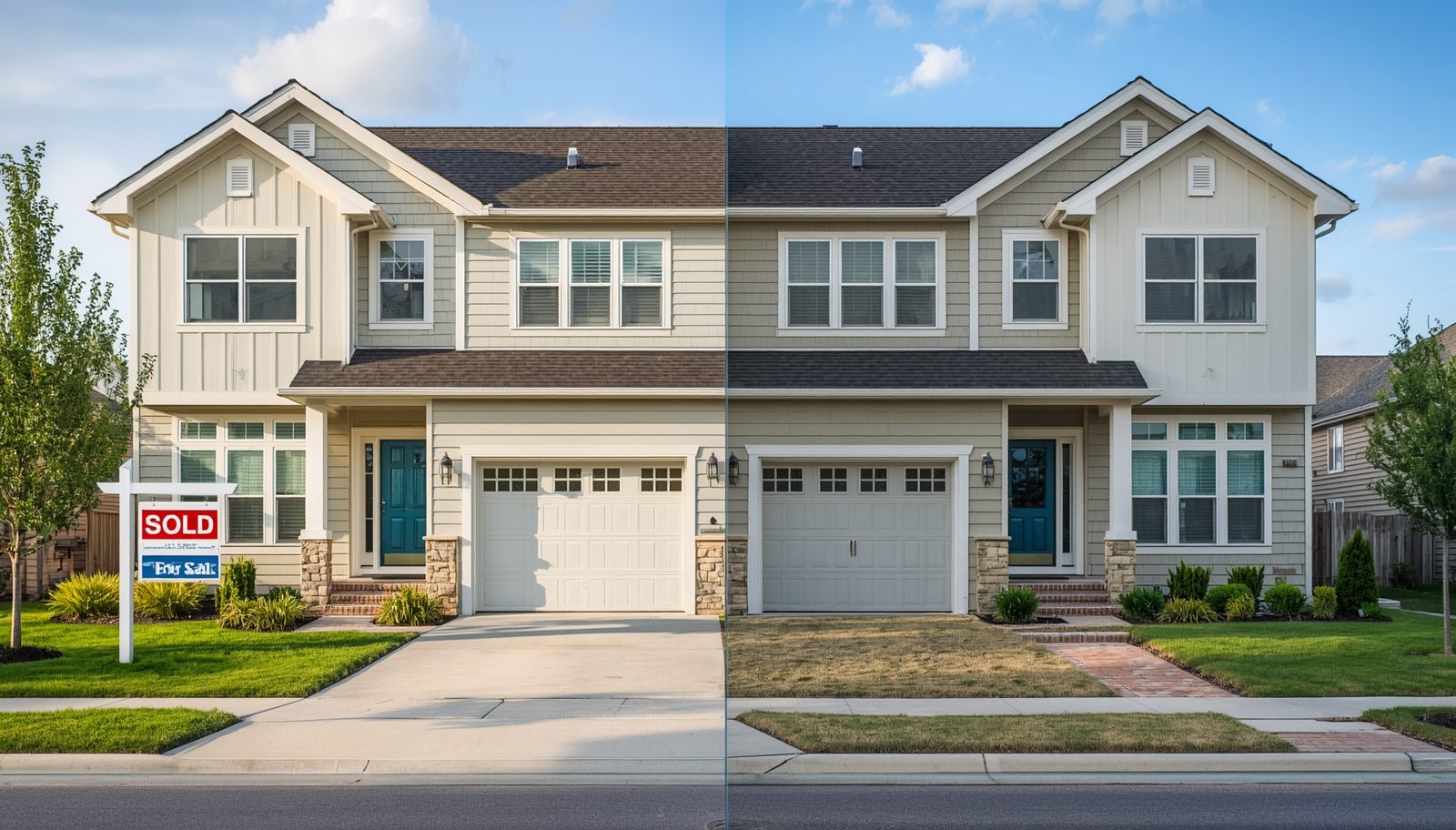
Two homes can share the same street—but strategy is what determines whether one sells in days and the other lingers for months.
The Reality Most Sellers Don’t Expect
It’s one of the most common (and frustrating) questions sellers have:
“How did that house down the street sell in a weekend… but this one is still sitting?”
Same neighborhood.
Similar square footage.
Maybe even the same builder.
And yet—completely different results.
This isn’t random.
It’s not luck.
And it’s definitely not just “the market.”
It’s strategy, execution, and positioning.
Let’s break down what’s actually happening.
1. Pricing Isn’t Just a Number—It’s a Strategy
Many sellers believe pricing is about getting the most.
In reality, pricing is about:
- Positioning within the current buyer pool
- Creating urgency vs. hesitation
- Driving competition (or avoiding it)
A home priced even slightly above market perception can:
- Sit longer
- Get fewer showings
- Trigger price reductions
- Ultimately sell for less than it could have
Meanwhile, a well-positioned home:
- Attracts attention immediately
- Feels like “a good opportunity” to buyers
- Can generate multiple offers
This is where strategy beats ego every single time.
2. First Impressions Are Doing More Work Than You Think
Buyers don’t “warm up” to a home anymore.
They decide—fast.
Before they even step inside, they’ve already judged:
- Listing photos
- Condition
- Perceived value
- Whether it’s “worth seeing”
Homes that sit often struggle with:
- Poor or dark photography
- Cluttered or overly personalized spaces
- Deferred maintenance
- Lack of visual flow
Homes that sell quickly:
- Feel clean, bright, and intentional
- Photograph beautifully
- Make it easy for buyers to say “yes”
Online presentation isn’t marketing fluff—it’s the first showing.
3. Condition vs. Expectation (This Is a Big One)
Here’s where things get nuanced.
A home doesn’t have to be perfect—but it does need to match buyer expectations for the price point.
If buyers expect:
- Updated kitchen → but see dated finishes
- Move-in ready → but notice repairs needed
- Neutral space → but feel overwhelmed by style
They hesitate.
And hesitation kills momentum.
Meanwhile, a home that aligns expectations:
- Feels “worth it”
- Reduces mental objections
- Keeps buyers emotionally engaged
It’s not about perfection—it’s about alignment.
4. Marketing Isn’t Just “Putting It on the MLS”
Let’s be honest—every home gets listed.
That’s not the differentiator.
What does matter:
- How the home is introduced to the market
- The story it tells
- The exposure it gets in the first 7–10 days
A strong launch includes:
- Professional photography
- Strategic listing copy
- Pre-marketing or “coming soon” buzz
- Targeted digital exposure
Why?
Because the first week on market is when:
- The most eyes see the property
- Buyers perceive it as “new”
- Momentum is created (or lost)
You don’t get a second “first week.”
5. Access Matters More Than You Think
This one is often overlooked.
If it’s hard to show… it’s hard to sell.
Barriers like:
- Limited showing windows
- Strict notice requirements
- Tenant complications
- Pets, odors, or daily disruption
All reduce:
- Buyer traffic
- Agent willingness to show
- Overall opportunity
Homes that sell quickly are:
- Easy to access
- Flexible for showings
- Prepared for consistent traffic
Convenience increases competition.
6. The “Why This One?” Factor
Buyers are always comparing.
Even within the same neighborhood, they’re asking:
“Why this house over that one?”
And if that answer isn’t obvious…
They move on.
Homes that sell fast typically have:
- A standout feature (layout, lot, updates, light)
- A clear value proposition
- A feeling that’s easy to connect to
Homes that sit:
- Blend in
- Feel uncertain in value
- Lack a strong identity
Every listing needs a reason to be chosen.
7. Momentum Is Real (And It Matters)
The longer a home sits, the more buyers start asking:
- “What’s wrong with it?”
- “Why hasn’t it sold?”
- “Should we wait for a price drop?”
Even if nothing is wrong.
Days on market creates a narrative.
Homes that sell quickly:
- Capture attention early
- Build momentum
- Create urgency
Homes that sit:
- Lose energy
- Invite negotiation
- Shift leverage to buyers
The goal isn’t just to list—it’s to launch with impact.
Closing Thoughts
Two homes can look similar on paper—but the experience they create for buyers is entirely different. The homes that sell fastest aren’t always the nicest—they’re the ones positioned most effectively, from pricing to presentation to strategy. And that’s not something you leave to chance—it’s something you plan for.
FAQs
Why didn’t my home sell if another one nearby did?
Even small differences in pricing, condition, photos, or timing can significantly impact buyer behavior. It’s rarely just one thing—it’s the combination.
Should I price higher to leave room for negotiation?
In today’s market, overpricing often leads to fewer showings and longer days on market, which can hurt your final sale price.
Do I really need to update my home before selling?
Not always—but your home should align with buyer expectations for its price point. Strategic updates (or adjustments) can make a big difference.
How important are listing photos, really?
Extremely. Most buyers decide whether to see a home based on photos alone.
What’s the biggest mistake sellers make?
Waiting too long to adjust—whether it’s price, presentation, or strategy—after the market has already given feedback.